Saturday, July 2, 2011

Nik's Unheralded Albums #6: Julian Lennon, "Mr. Jordan."

I do feel bad for the children of rock stars. Never mind all the lunacy involved around growing up being Keith Richards Jr or whomever, but then there’s the impossible expectations that come if you decide to follow in their footsteps. The music world is littered with Frank Sinatra Juniors, Jakob Dylans and so forth.

One kind-of-success was John Lennon’s oldest son Julian Lennon. He had a few minor hits back in the mid-1980s, then sank from sight. His first two albums were what I'd call perfectly pleasant pop -- with their biggest attraction Julian's startling similarity to his late father's voice. But only so much can be done with nostalgia, so Julian Lennon never quite rose above one-hit wonder status with his single "Too Late For Goodbyes."
 
Yet Lennon Jr. continued plugging away, and surprised with his third album, 1989's "Mr. Jordan," a more sonically adventurous little gem – the kind of pop that’s often called “Beatles-esque” which here at least can be traced partly to genetics. I’d say it’s the highlight of Julian’s brief recording career, with a self-assurance that his earlier work lacked.  The mellow singer-songwriter vibe has been replaced by a grittier, more experimental sound that really works well.

The very first track of "Mr. Jordan" announces that we're moving on from John Lennon to David Bowie as an influence, with Julian boasting a deeper, sturdier singing voice than before, more willing to expand his range. "Now You're In Heaven" pulses with a strong beat and crunchy guitar riffs, sounding like a lost single from Bowie's "Lodger." "Open Your Eyes" bounces along on a very '80s Human League keyboard line, mashed together with a dash of "Tomorrow Never Knows" swirl. "Angillette" is a sweeping ballad that does echo "Mind Games"-era Lennon, but is tinted with Julian's own distinctive ache. With "Get Up," Lennon reaches further back into rock history with a loose-limbed rockabilly pastiche. Everything-and-the-kitchen sink album closer "I Want You To Know" is a psychedelic romp that piles on the soundscapes (at one point Lennon sounds like he's singing while marching underwater). "Mr. Jordan" is a magpie of an album, with Julian trying on a variety of musical hats, some of which fit better than others. His willingness to experiment is bracing and he sounds far more free than he did in his earlier work. But after a couple more albums, that was it for Julian's music endeavors.
 
Lennon seems to have given up the music biz, and I can’t say I blame him – it rarely turns out well for pop kids. But over his brief heyday he delivered some material that moved well out of his father's shadow. (The music of his half-brother Sean, whose own hipster-ish solo records got a bit of hype in the 1990s, has aged far less well to me.) While Julian Lennon can't ever hope to entirely get past that formidable father figure, "Mr. Jordan" shows he had a voice of his own.

"Now You're In Heaven" video:

Tuesday, June 21, 2011

Movie Review: Green Lantern

Apparently, "Green Lantern" is the worst thing in the history of ever if you read the message boards. But it isn't actually. It's another fairly routine comic book movie, with a handful of flaws and missteps, but I still found it decent entertainment. Its big problem is it comes amongst a tsunami of comic movies and offers too much of the "same old thing," which "Thor" and "X-Men: First Class" managed to avoid. At this point, I think we comics geeks kind of expect more.

Green Lantern is a step or two down from the Batman and Superman level for DC Comics, but he's been a pretty successful character for going on 70 years now, through a variety of incarnations. The Green Lantern Corps -- a cosmic police force - has spun off into all kinds of configurations, but the best known Green Lantern is Hal Jordan, former test pilot who becomes Earth's first Lantern Corpsman.

"Green Lantern" the movie introduces Jordan (Ryan Reynolds) and his world and goes for a kind of "Star Wars" meets "Iron Man" tone. The faraway world of Oa and the diverse alien corps are wonderfully realized in a million hues of green. Where "Lantern" stumbles is the same place other comic movies like "Iron Man 2" did -- trying to cram in too much. Between the Corps members, Sinestro, villains Parallax and Hector Hammond and Hal Jordan's personal life, there's enough for a couple movies. The film develops a choppy rhythm, rushing to its climax where suddenly novice ring-bearer Jordan becomes an expert warrior.

But still -- I liked Reynolds' breezy, yet insecure Hal Jordan. Jordan is one of those comics characters I've never really warmed to - a generic square-jawed hero who later developed deep problems and even became a mass murderer (as you do). The movie takes the shorthand method of characterizing Jordan (using a heaping helping of traits from another comic Green Lantern, Kyle Rayner). Mark Strong also commands the screen as stern alien leader Sinestro, whose name is a dead giveaway for how the character ends up in the comics. Peter Sarsgaard also makes the most of a rather confusingly written character as the nerdy, betrayed Hector Hammond.

I didn't really think much of co-producer and overrated comics writer Geoff Johns trying to awkwardly cram in many of his own creations like Parallax, a nebulous floating fear demon, or yellow power rings and the like. I'm not a fan of the red, yellow, pink and whatever Lanterns he's created in the comics. The blue Guardians of the Universe are also one of those comic-book concepts that just look a bit goofy on screen.

Unlike "Thor" -- where I thought the balance between the fantastical Asgard and the mundane New Mexico actually worked -- "Green Lantern" comes to life best in the outer space sequences. I wanted more of Oa, more of the eye-catching alien Corps, and less of Hal Jordan mooning about over the bland Blake Lively. There's too much that's familiar in "Green Lantern" -- hero discovers powers, hero tested, hero triumphs. For comic movies to succeed when there's so many of them these days they need to set themselves apart, like "Thor" and its Nordic gods or "The Dark Knight" and its epic morality plays.

But y'know, I took Peter, 7, with me to it which is perhaps the best way to see a movie like this, with a boy whose eyes open wide at every sight we grown-ups would call cliche. I mean, Peter even gets a kick out of the much-maligned "Fantastic Four" movies (which "Green Lantern" still surpassed in my humble eye). I know "Green Lantern" isn't a great movie, but I had a great time watching it with Peter. So in that respect, it works pretty well for some ages.

Sunday, June 19, 2011

100 Years of The Daily Mississippian

An old boss of mine turned 100 years old this past weekend -- The Daily Mississippian, my college newspaper and the first place I earned my journalism "stripes," so to speak. Being on the other side of the world and all I couldn't exactly make the centennial events (but hopefully a drink or two was had on City Grocery's balcony on my behalf). But more than 15 years after I finished college, I've still got many a fond memory of the old DM, my training ground for a career that's been changing and shifting ever since. Since 1911, the DM has been the voice of debate and news at the University of Mississippi.

It's stunning to look back at my DM term - roughly 1992-1995 or so - and see how much has changed. The "Internet" was barely a notion then, the idea of computer layout of our pages was a shocking novelty (just a year or so before I came along, the paper was still using an ancient pre-desktop publishing system of pagination). The job I have today -- production editor for a major metropolitan newspaper website -- simply didn't exist then.

The DM was a terrific place to hang out in college, in the basement of Farley Hall and just across the hall from the hip campus radio station. Putting out a five-day-a-week newspaper felt like being in a club, where a variety of raconteurs, oddballs and iconoclasts were shoved together out of their shared love of the journalism dream. I held a variety of semi-official "titles" there -- opinion page editor, features writer, assistant entertainment editor or something like that, columnist, cartoonist -- and while I didn't live down there 24-7 in the basement like a lot of the staff, I felt the first tinglings of the familiar newsroom buzz that is still an intoxicant to any newshound. We alumni still fondly speak of "The Ice Storm of 1994" which closed down the campus and we scrambled to create an 8-page "EXTRA" edition to cover.

An awful lot of the newspaper's controversy revolved around Ole Miss' evolving place in the post-integration world -- this was a campus which was integrated by the government forcibly in 1962, just 30 years before I arrived, and the wounds were raw -- bullet marks still speckled the administration building columns. When I was there one of the editors was the great Jesse Holland, only the second African-American editor of the paper. I still remember the day some local redneck rang up and got Jesse on the phone and then angrily said, "I wanna speak to the WHITE editor!" Sorry, Mr. Cracker, the times have a-changed and Jesse's since gone on to be the Associated Press's US Supreme Court correspondent. Folks who haven't lived in Mississippi still give it a lot of scorn today, but I tell you, I was there to watch the world ever-so-gradually changing. I'd love to know how that redneck's mind was blown by President Obama.

I learned an awful lot at the DM -- I interviewed California's ex-governor (and once again governor today) Jerry Brown, I met Henry Kissinger, hung out with local writer-made-big John Grisham, and wrote vaguely pretentious newspaper columns about my first loves and the music I was listening to -- the kind of columns every 22-year-old writes and thinks nobody else has ever done.

But the biggest charge I ever got at the DM was doing my very own daily newspaper strip for a year or so -- "Jip," a kind of goofy pastiche of Martin Wagner's "Hepcats" with "Bloom County," "Peanuts" and "Doonesbury" that was like flying by the seat of my pants every day as I sat at the drawing board trying to come up with gags and one-liners and characters that seemed at least slightly real to me. It was a real stretch of the creative muscles and an utter blast to do.

These days I work in a "digitally active newsroom" where I do things like live-blog the Royal Wedding, a sentence which would've been half-incomprehensible in 1994. Unlike many of my old pals from the DM, I'm still hanging on in the journalism industry despite its many seismic changes and cutbacks -- and I'm always grateful to the ol' DM for helping get it all started for me. Happy birthday.

Wednesday, June 8, 2011

Movie Review: X-Men: First Class

I still remember how amazing it seemed 11 years ago that they were actually making an "X-Men" movie from one of my favorite childhood comics -- and here we are with the fifth now out, "X-Men: First Class."

I won't call it a "reboot," because man am I sick of that phrase, but as a prequel, "First Class" is genuinely exciting stuff, filling in the gaps in the relationship between Professor X and Magneto and providing the required amount of summer-movie explosions and such. It's easily the best of the "X-Men" movies after "X2," I think, although I don't view "X-Men: The Last Stand" and "Wolverine" with quite as much visceral scorn as the rest of the Internet seems to.

The Malcolm X/Martin Luther King kind of dynamic between Xavier and Magneto over mutant rights has been fodder for many of the best "X-Men" stories over the decades, and "First Class" follows the relationship from its start -- including young Magneto's tortured youth in a Nazi concentration camp. There was the solid decision to make this a period piece set in the 1960s, in a world where mutants hold the balance of power in the Cold War and the real-life Cuban Missile Crisis is cleverly folded into the plot.

What I liked:
I have really dug Michael Fassbender in movies like "Inglourious Basterds" and "Centurion," and he owns the screen as a young Magneto. I'd actually say he's better than Sir Ian McKellen was in a lot of ways, tapping into the character's rage and wounded dignity. James McAvoy is less flashy as young Professor X, and plays it a bit goofy with his lounge lizard "groovy" slang sometimes, but ably convinces of Xavier's essential heart and compassion. You believe this man will grow up to be Patrick Stewart.

Jennifer Lawrence brings some needed depth as young Mystique, a shapeshifter trying to fit in. It's a shame her character was nowhere near as well written in the first few "X-Men" movies, and doesn't really mesh well with the more thoughtful woman shown here. The other younger mutants on screen here get less time to develop their characters and some of them are rather weak actors, but Nicholas Hoult as Beast is a stand-out (although I'm afraid I didn't find the CGI/makeup used for his "transformation" later in the film very effective).

The Hellfire Club of the comics, a kind of mutant Masons, were always one of my favorites, and it's good to see them on screen albeit in a somewhat different form. I love Kevin Bacon playing a scenery-chewing Sebastian Shaw. While he isn't exactly the same burly dandy the comics have featured he does a good job of providing sinister menace. January Jones as Emma Frost looks fantastic, but as seen on "Mad Men" the icy Jones seems to have exactly one facial expression about 90% of the time.

What I didn't like:
The movie is fitful in its desire to keep to the 1960s setting. While there's marvelous James Bond/Austin Powers type touches, like Sebastian Shaw's evil submarine and Emma Frost's go-go wardrobes, other times the movie seems to be set in the modern day. Director Matthew Vaughn ("Kick-Ass") has a lot of style, but it feels like he was holding back a bit (kicky split-screen montage sequences are one of his better gimmicks).

It's a real grab-bag of mutants assembled here for any long-time reader of the "X-Men" comics. You've got Beast and Professor X from the "real" comic book first class, then Havok and Banshee from a slightly later era, and then mutants so darned new in the comics I'd barely heard of them, like Darwin and Azazel. Still, unless you're some kind of rampant continuity nut, the team assembled here works for the story -- and if you're a rabid continuity nut you're going to be really annoyed anyway by how the fate of Charles Xavier in this film doesn't seem to match up at all with appearances he made in "X3" and "Wolverine." So it goes.

After the mixed reception "Wolverine" got I kind of hope "First Class" keeps the X-fires burning. There's a lot of good stories yet to be told, and "First Class" reminds us of the potential the first few "X-Men" movies showed, back when we didn't have 6-7 comic books opening a year.

Saturday, June 4, 2011

Peter Sellers Saturdays #5: "The Magic Christian" (1969)

The story: Eccentric gazillionaire Guy Grand (Sellers) has apparently gone off his rocker. He adopts a homeless hippie (Ringo Starr) and embarks on a series of increasingly surreal practical jokes aimed to show the lengths people will go to for money -- humiliating themselves in various ways to get a handful of Guy's vast fortune.

Who's Sellers: Guy Grand. With his floppy hair, tweedy mustache, sad eyes and false good humor, Sellers does what he can with a horribly weak script to give the character life and motivation. I kind of saw Sellers playing him as a man who's done everything, who's been a debauched scoundrel, and who's now just going for sheer crazy kicks. Basically, though, he's a shit-stirrer, doing things like buying a vastly expensive painting to destroy it in front of a snooty art dealer, or filling a vat with urine, feces and money and seeing who'll dive in for the cash.

So how is it: How much more 1969 could this movie be? None more 1969. This is one of those Sellers movies that has a pretty bad reputation on a lot of fronts, but y'know, once I got into its anarchistic spirit, I kinda dug it. There's next to no character development and the plot just kind of lurches from skit to skit -- who is Guy Grand and why has he gone off his rocker? Why does "Junior" just blindly follow along with him? But there's a verve and lunacy to it all that makes it fun to watch, which a lot of other similarly "madcap" '60s flicks never quite managed. Ringo is, well, being Ringo basically, but his deadpan I'll-go-along-with-anything cheer plays well off Sellers. Great soundtrack, too, with Badfinger and Thunderclap Newman galore. It takes a while to really take off, but by the time Christopher Lee pops up on a cruise ship in a Dracula suit, you kind of just go with the flow.

While it's a sloppy, freewheeling and highly blatant piece of hippie kitsch satire, there's a bit of fun if you're in the right mood to be had in watching Sellers & Starr so eagerly puncture the hypocrisies of the uptight squares of 1969 London. With tighter direction and more emphasis on actual characterization it could've been a protest era classic, but as it is it's nowhere near as bad or lazy as some of Sellers' other misfires from this era. The biggest problem is that, like a lot of 1960s idealism, it offers a lot of attacks on a system but little in the way of solutions. Some other reviews point to this film as a forgotten link between the "Goon Show" comedy era of Sellers' early career to the world of Monty Python in the 1970s. (Pythons Graham Chapman and an amusing, already-officious young John Cleese appear in cameos here too to extend the connection. There's a ton of other cameos including Raquel Welch, Roman Polanski and Yul Brynner. Reportedly John Lennon even pops up but I didn't see him.) It's a failure as a "message movie," but "The Magic Christian" is still entertaining.

Grade: B+

Quote: "I just wanted to see if you had your price … most of us do." - Guy Grand

Tuesday, May 24, 2011

Happy 70th birthday, Bob Dylan - and 10 of my favorites

The beautiful thing about Bob Dylan for me is that you never quite get to the bottom of him. After a casual Dylan fandom for years, I dove whole-heartedly into the world of Dylan obsessiveness about five years ago. I haven't quite come up for air yet. Today, the man turns 70.

So in honor of Mr. Dylan's 70th, here's a list. Of the hundreds of Dylan's songs that are out there, my favorites are constantly changing. Here's what my 10 top Bob Dylan songs are today. Tomorrow, they could be entirely different. That's kind of the beauty of Bob; everybody's Dylan is a different one. Happy birthday, Mr Zimmerman!

Blowin' in the Wind: This was probably my first exposure to Bob Dylan; I remember singing it in class in third or fourth grade during music lessons. It stuck in your head, instantly. I think I'd assumed it was some 100-year-old standard, not knowing it was written less than 10 years before I was born. Some of Dylan's songs kind of seem like they always existed, excavated from the earth at just the right time.

Not Dark Yet: Is this 1997 song from "Time Out Of Mind" the most depressing one Dylan ever wrote? Perhaps, but there's something so beautiful about this mournful ode to the end of love and the end of one person's world, it's like a particularly stunning tombstone. Hushed and elegaic, this song is proof rock stars can grow old with superb dignity.
 
Maggie's Farm (live at the Newport Folk Festival, July 1965): It seems hard to imagine these days that Dylan going "electric" stirred up so much fuss once. But listen to this raw molten blast of sound from the Newport Folk Festival where Dylan blew a crowd of Peter, Paul and Mary fans to bits. I love the song, but I love this particular performance of it found on the "No Direction Home" soundtrack even more -- it's a giant middle finger by Dylan, who sings the lines "I AIN'T gonna work on Maggie's farm no more" like his life depended on it. Maybe it did.
 
Tombstone Blues: Off all Dylan's madcap surrealistic lyrics, this is the one I've always loved the most -- from "Highway 61 Revisited," a rollicking, quite funny tour of whimsy and tragedy. I couldn't begin to tell you what it's actually about, but the way young Bob reels off lines like "The geometry of innocent flesh on the bone / Causes Galileo's math book to get thrown" is just vastly entertaining, like a drunken carny rattling off his spiel to anyone who'll listen.
 
Subterranean Homesick Blues: Did Bob Dylan invent rap? Honestly, if you listen to this classic, you have to at least give him a few nods in that general direction. Free-wheeling and hip, it's a mash-up of Beat poetry and talking blues that pretty much invented a handful of genres of music. And let's not forget that classic film clip of Dylan flipping cue cards to the tune from "Don't Look Back" -- a giant step towards MTV and the video revolution, too.
 
Lay Lady Lay: One of Dylan's cheesiest songs, perhaps, from the "Nashville Skyline" era where his voice suddenly took on a surprisingly silky crooner's tone. And "Nashville Skyline" is a rather slight album compared to the masterworks that came before it, but I love it all the same - a simple homage to hearth and home, gorgeously produced and one of his biggest hits. Sure, it ain't political or surreal, but it's just a mighty pretty song, and Dylan's written plenty of those for the ages, too.
 
Idiot Wind: From love to heartbreak -- from "Blood On The Tracks," this is a blistering trip into the eye of the storm of a relationship crumbling to bits. There's a breathtakingly honest anger and plain meanness to this song, which is almost like reading someone's secret diary. It's so intimate it's uncomfortable, as Dylan spits out lines like "One day you'll be in the ditch / flies buzzing around your eyes." But it's a powerhouse because it feels so true.
 
You Ain't Goin' Nowhere: I have a specific memory attached to this song, of a favorite restaurant/hangout back in Oxford, Mississippi, and the night it closed its doors. A ton of local musicians, including members of the band Wilco, sung the night away to bid the cafe farewell, and a shining highlight was a merry singalong of this Dylan tune. It's hardly one of the deepest of Dylan's catalogue, but it's a song that seems to celebrate being alive, getting out of scrapes and surviving to sing the night away.
 
Hurricane: For my money, the best Dylan "protest song," although there have been many great ones. An older Dylan takes the raw talent of his youthful songs and adds the indignant outrage that comes with age and experience as he takes on the case of convicted murderer, boxer Rubin Carter. Did "Hurricane" Carter do it? Even if you think he did, by the time the 8 roaringly angry minutes of this song go by you might well have changed your mind. That's what a truly great protest song can do.

I'm Not There: From the legendary "Basement Tapes," most of which have never seen official release, this haunting number was released on the soundtrack of the Dylan homage movie of the same name a few years back. It's Dylan at his spookiest Weird America best, hushed and sounding like he's singing from a million miles and years away.
 

Sunday, May 15, 2011

Nik's Unheralded Albums #5: "The Lost Boys" Original Motion Picture Soundtrack

When a soundtrack is at its peak, it evokes a movie but also kind of surpasses it -- you listen to the crashing cadences of Strauss for "2001: A Space Odyssey" or the jangly retro hits of the "Rushmore" soundtrack, and you find yourself reliving your favorite bits of the movie, but you also kind of create an idealized version of it in your head. It turns out "Top Gun" is actually a kind of terrible movie if you watch it today without the affections of nostalgia, but man, whenever I hear Kenny Loggins sing "Danger Zone," I'm 15 again and feel a spontaneous quiver of excitement, as a movie that's way better than the actual "Top Gun" ever was unspools in my brain.

Which brings me to "The Lost Boys," the 1987 teen vampire movie that chews up "Twilight" and spits it out in gory little pieces. An early work by "Batman & Robin" auteur Joel Schumacher, it's all smoke machines, hair-spray fashion and pouty angst, but it's still actually a heck of a lot of fun. And the soundtrack is a tasty slab of vintage '80s bombast and cheese, one I have a rather unaccountable affection for. Unlike a lot of the big '80s movie soundtracks it doesn't boast wall-to-wall hits like "Footloose" or "Dirty Dancing" did, and your biggest stars are INXS and Echo and the Bunnymen. (If they'd paid better, you'd have thought they could've gotten Depeche Mode and Sisters of Mercy to sing on this thing.)

But "The Lost Boys" soundtrack in its sunglasses-at-night sweep perfectly captures the glossy feel of the movie, which was Goth without the gloom, sexy without being nasty about it. Jason Patric, an evil pre-Jack Bauer Kiefer Sutherland and Jami Gertz brood a lot and the two Coreys provide comic relief. Bill from "Bill and Ted's Excellent Adventure" plays a vampire. It features one of the great cinematic closing lines. But it's glossy trash, of course.

Lou Gramm's screeching anthem "Lost in the Shadows" pops up several times in the movie -- I particularly like the breathy urgency he puts in as he sings against the beat. Gerald McCann's theme song "Cry Little Sister" is melodramatic and gaspy Harlequin romance Goth. The marvelous cover of The Doors' tune "People are Strange" by Echo and the Bunnymen nicely captures the movie's tone of parody mixed with menace. Another cover tune I've always liked here is Roger Daltrey's take on Elton John's "Don't Let The Sun Go Down On Me." (A song tailor-made for vampire flicks.)

Bodybuilder/sax man Thomas Capello's bizarre scene singing "I Still Believe" is so insanely homoerotic and over-the-top in the flick that it spawned a "Saturday Night Live" parody decades after the movie. (Seriously, why didn't someone tell the guy to put a shirt on at least during the filming of this scene?) But while you can't watch that scene without giggling, the actual song itself isn't terrible, in a Huey Lewis if he were a bodybuilder kind of way.

But sometimes a big slab of cheesy music from your youth is what you need. I haul out the Journey's "Greatest Hits" disc sometimes and still feel my blood start pumping when Survivor's "Eye of the Tiger" theme music from "Rocky III" rings out. "The Lost Boys" soundtrack sold less copies than "Top Gun" and "Flashdance" did but in some way I'd call it the perfect '80s movie soundtrack -- very little irony, lots of bombast, and hooks that may leave you feeling a bit of guilty pleasure but still won't quite stop echoing around your brain.

Thursday, May 12, 2011

Superheroes I love #9: The West Coast Avengers

This time out, rather than one particular hero, let's look at a whole team of them that I always had a thing for.
 
Who: The West Coast Avengers were the '80s "spin-off" Avengers comic, based in California and led by one of my favorite Avengers, loudmouthed but goodhearted archer Hawkeye. The team also included at its start Hawk's wife Mockingbird, Iron Man, Wonder Man and Tigra, all set up in a former Hollywood star's mansion and fighting crime on the West Coast -- which seemed quite a novelty at a time when 99% of comic book superheroes seem to live in Manhattan. Being a Californian myself, the WCA, as they were known, felt like "my" team. 
 
Why I dig: The West Coast Avengers were the underdogs of the Avengers franchise, lacking the big heroes (except for Iron Man, but his involvement seemed half-hearted) but scrappy and amiable. They'd battle bizarrely goofy villains like Master Pandemonium, whose limbs popped off at will; Razorfist, a guy whose fists were both replaced by large knives (which would seem to make daily life outside superhero battles rather unpleasant), or Cactus, who was, yes, a sentient walking cactus. Not exactly Dr. Doom.

The book had two key runs -- a colourful, high-action era written by Steve Englehart and drawn mostly by Al Milgrom, and a more modern, grim 'n' gritty take by John Byrne for a dozen issues or so. I also really love the original miniseries written by Roger Stern which introduces the team and is probably the best single story the book ever had; a team of novice and insecure Avengers move to California and end up fighting one of the world's strongest villains.
 
The ongoing book had its bumpy road, and charms  often mired in kitsch -- Wonder Man's almost uniformly horrible costumes, Tigra's bimbo supreme troubles, Hawkeye's hearty temper tantrums, the one-note approach to much of the characteristation. (The West Coast Avengers were generally a whiny lot.) Englehart is going for a very silver age tone, which makes the book look almost childish sometimes. The arguable highlight of Englehart's run is the twisting 7-part "Lost in Time" saga, which splits up the entire team over time and ends up juggling several different story threads at once in a fun tour of Marvel Comics history. The team expanded to include other interesting members or quasi-members like Thing, Firebird and Moon Knight.
 
John Byrne came along after the book had been puttering along for a few years and promised to do his patented "reimagining" and revitalize it. Now, I loved Byrne's work on the book at the time -- his art, bold and dynamic, was a huge improvement -- but read today, it's got problems. He relied on shock over sensible plotting -- the entire "Vision Quest" arc which systematically destroyed the long-running happy Vision and Scarlet Witch marriage, for instance, has left both once-beloved characters pretty much screwed up to this day. There's a lot of changes over his short run, and it's still exciting stuff to read, but Byrne failed to really follow through with any of it, with many subplots just trailing off. The shortened nature of his run over an editorial dispute on the book leaves it lacking. Yet a lot of the changes still echo more than 20 years later -- turning Scarlet Witch into a raving nutter, for instance, or the goofy fun Great Lakes Avengers.
 
I didn't really follow the WCA after Byrne left -- the few issues I've read after that were almost uniformly terrible. The book ended with #102 in 1994 and was replaced by the "This is why 1990s comics sucked" poster child book Force Works. But for a little while, West Coast Avengers was a fun superhero team book, not one that changed the world by any means, but its easygoing camaraderie and sense of fun make it memorable. And how can you not love a B-level superhero team who inspire an entire groovy rap album?
 

Friday, May 6, 2011

Movie review: Thor

It's strange for a 30-year comic book geek to admit, but I never really much cared for Thor. When I was in my younger avid collecting days there were only a few characters whose books I never bought, and one of 'em was Thor. The long hair, the bare arms, the high-faluting fancy talk? It all seemed too lame to me.

But yet Thor is a compelling character, which took me a while to realize -- a god who walks among men, caught between two worlds, and now that I'm less of a nerdy fanboy I've found some very good Thor comics such as the legendary ones by Walt Simonson and the sturdy originals by Lee and Kirby. The highly entertaining new movie "Thor" reminds me a lot of "Iron Man" -- it takes a B-grade hero who's been in far more mediocre comics than truly great ones over his 50-year history and distills it down to its essence.

"Thor" combines culture clash with smashing action and adventure and feels like something rather new among the current glut of comic movies. It's not a story of some humble nerdy type who learns to become a hero. It's got equal elements of Lord of the Rings-style fantasy and superhero action. It's a tale of a god who learns humility, wrapped up in lots of family drama dynamics and good old frost giant-smashing. It's got a good solid sense of humor and whimsy which you kind of need when dealing with Norse gods throwing giant hammers about, yet it knows when to pile on the serious as well.

What I liked:
I wasn't sure about casting relative unknown Chris Hemsworth as Thor, but he pretty much knocks it out of the park in a starmaking performance -- rather than having the character speak the typical mangled Elizabethan style that the comic did for years, he adopts a more general formal tone. The scenes where Thor is stranded, powerless, in a small New Mexico town are great culture clash fun.

A relentlessly scenery-chewing Anthony Hopkins makes for a logical Odin, while Tom Hiddleston does a very good turn as slippery Loki, although the script fails him sometimes with muddled motivations and character turns. Natalie Portman brings nice charm to Thor's earthly love interest Jane Foster, while director Kenneth Branagh ably balances big-action moments with smaller character beats that make this feel a bit less disposable than it might have.

And it's a pleasure to see a superhero movie that really embraces the cosmic scale -- one failing of, say, "Iron Man 2," is climactic battles that kind of disappoint. Here, we see giant armies of frost giants, a Thor/Loki throwdown that's quite epic, and the extraordinary Jack Kirby creation the Destroyer brought to vivid life.

What I didn't like:
Well as usual, the "3D" edition of the movie is a gimmick and not worth paying extra for -- I'm actively avoiding 3D versions of most movies when I find them, as the 3D films tend to be projected too dark, rarely utilize the format well and generally just a big hype.

The one thing about "Thor" that sticks with me is the general look of Asgard and the Asgardians -- I'm not quite sold on it, yet I'm not quite sure how I would've done it. They're all very shiny-armored and colourful, but I wonder if it would seem more "real" if Asgard looked a bit more lived in rather than like a lot of plastic models. Yet it is a god's realm, and who really knows how that's meant to look? As I've said before, it's a fine line between making Asgard look cool and having it look like a bad rock video. It's also a shame to see Rene Russo relatively wasted as Thor's mother, but so it goes.

Despite all the very solid acting talent and one of my favorite creators Joss Whedon at the helm of next year's giant "Avengers" movie, I'm still rather uncertain about it. Frankly the weakest parts of "Iron Man 2" and "Thor" are those where they try to awkwardly shove in a "shared universe" and twee cameos. (Although seeing ace archer and "Avengers" co-star Hawkeye, briefly, in "Thor" is pretty sweet, actually. Guess I'm still a comics geek after all.)

Wednesday, May 4, 2011

All the news that's fit to tweet

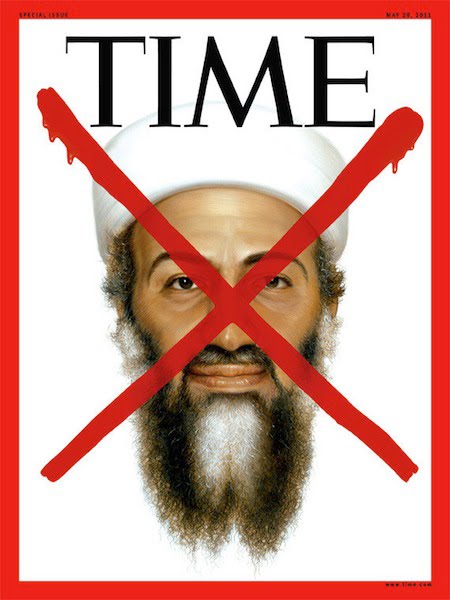
I've worked in journalism for 15+ years now, but rarely have I enjoyed the kind of immediacy I do with my new online job, where all it takes to disseminate your story to the world is a click of the button. This week has been a non-stop onslaught of breaking news -- the royal wedding, some Osama character you might've heard about, and an extraordinarily rare fatal tornado right here in Auckland yesterday.
 
For both the big global news stories of the last week I've been tasked with running a kind of NZ-centric Storify feed on the website of "vox populi," filtering Facebook, Twitter, Flickr and more into a giant mass o' opinion that runs concurrently with the more hard-news stories. This sort of aggregation is a kind of reporting that would've been hard to imagine 10 years ago -- there's a massive, ever-sprawling pool now of rants and raves and viewpoints online, and it never ever stops. As I "live tweeted" the royal wedding I found it fascinating -- the flow of information is so fast on the Twitter/Facebook feeds that you literally have to just grab and run -- and it was also kind of dizzying, too. After 6 hours straight of reading the world's Tweets on Wills and Kate your brain does kind of turn into mush.
 
And then the world's most wanted man, Osama bin Laden, met his logical end Monday and it was a whole other set of tweets and comments to gather up. This story was very different from the royal wedding and tended to arouse all kind of firm views. As a fence-straddler, I found myself kind of turned off both by the bloodthirsty patriotism and the sanctimonious moralizing from both extremes.

I agree, people who live in America have no idea how utterly awful the mobs shouting "USA! USA!" looks from overseas, but I also think that at this point in its history, America desperately needed a "win." It seems like dozens of my US Facebook friends are unemployed now, there's a cynicism in US society that never quite goes away, and this long-desired news gave the country something to celebrate, as tacky as some of the cheering may have seemed from afar. 
 
Both stories were strange to watch as an American living in New Zealand -- one dealt with the British monarchy and the possible future king of New Zealand, while one offered a very US-centric kind of catharsis that I don't imagine as many New Zealanders might have felt.

The Twitter/Facebook beast is something wholly new in journalism -- a never-ceasing flow of quotes without having to pick up a notebook. During President Obama's speech on Monday 4,000 tweets came per second. This quoteflow is the sort of thing that has newspapers and journalists questioning their relevance -- although I fall on the side of good journalism still being firmly necessary, as a way to filter through the impossibly dense voice of humanity online these days. By night's end I had 15,000+ hits on the Osama Storify feed -- a kind of instant gratification journalists rarely get.

Once upon a time the question used to be, how do I get the information? It's then moved on to how fast can I get the information? But maybe as the world continues to change every millisecond, the new question might be, where does the information stop?