Showing posts with label books. Show all posts

Wednesday, July 11, 2012

Captain James Cook, considered

I am fascinated by Captain James Cook, and the footprints he's left on New Zealand history.

Cook was the first European to widely explore New Zealand, to reach eastern Australia, to enter the Antarctic and visit many of the South Pacific nations. His travels took him from the bottom of the world to nearly the top in Alaska. By any measurement, he was one of the greatest explorers of all time, adding detail to a globe that was largely blank.

Cook's traces are everywhere in New Zealand - he spent a lot of time here on his three global voyages, mapping more of the country than anyone before and engaging with the Maori people. Last weekend, we were up in the Bay of Islands on holiday, and I stood in Oneroa Bay looking at the spot where Cook weighed anchor in 1769. I don't imagine the view has changed much since. I've visited several other spots Cook once landed in New Zealand and it's always fascinating to put your mind into this vanished world. A few years ago I got to see a life-size working replica of his famous ship the Endeavour in Sydney, and it blew my mind to realise just how small and cramped the vessel really was.

Captain Cook's legacy is seen as mixed these days - while he was unquestionably one of the greatest explorers of all time, the European invasion also changed life for the worse in many of the Pacific Islands and countries he visited. Disease, guns, poverty, even genocide followed in a lot of the countries Cook visited, like a dismal trail of modernization. But can you really lay all the ills of western civilisation at the feet of Captain Cook?

I've read several books about Cook, who kind of like Lincoln or Churchill, has new facets seen in each retelling of his familiar story. One of my favorite "Cook books" is New Zealand historian Anne Salmond's "Trial of the Cannibal Dog: Captain Cook in the South Seas," which attempts to equally give both the European and Pacific view of his travels. Salmond goes far deeper than the usual cliched "happy native" portrayal of islanders. She gives a deep and knowing look at their cultures and shows how places like Tahiti, with an entire society built upon the notion of free love, honour and lack of possessions clashed with the European culture. Salmond shows Cook's flaws, but also explains why things ended so badly for him in a compelling, original fashion.

Another book I highly recommend is Tony Horwitz's "Blue Latitudes: Boldly Going Where Captain Cook Has Gone Before," which is steeped in fascination with Cook's legacy and deeds. Horwitz has a very fun approach with the subject, hopping about and interviewing modern-day New Zealanders and others about their feelings on Cook, travelling queasily in a replica of the Endeavour, and trying to repair the "Conqueror Cook" reputation that has become fashionable these days.

My own opinion is that Cook was a great figure of history - not a perfect one by any means. But he filled in the map for nearly half the globe in a way few can even fathom now. The sheer courage involved in sailing off the edge of the map again and again is unimaginable. I was pretty fascinated a few years ago to stand on the replica of the Endeavour in Sydney and imagine this small boat heaving through the oceans, not just to the South Pacific but as far as the frozen Antarctic and all the way up to the Bering Strait in Alaska.

He could've been another Pizarro, wiping out natives with impunity. But Cook often genuinely tried to understand the cultures he encountered and forbade his men from raping and pillaging. Sure, by our standards today he would still come off as rather biased and racist, but you cannot judge a man of 1770 by the perspective of 2012. Cook's own moderately enlightened views frayed with time - by his third voyage, a worn-out Cook began acting far more ruthlessly, took umbrage at repeated thefts by Hawaiian natives, and the conflicts ended in his brutal death.

It's perhaps faint praise to say Captain Cook was a bit more liberal when compared to many other explorers of his time. But the rest of the world would have discovered the South Pacific eventually even if Cook had sunk just outside British ports on his first voyage. For his sheer intrepid ambition, his tremendous sailing skills and his attempts, blinkered as they might have been, to learn about the places he visited, Cook is still very much worth remembering.

"Ambition leads me not only farther than any other man has been before me, but as far as I think it possible for man to go." - Captain James Cook

Wednesday, March 14, 2012

I'll look it up in the encyclopedia

I realise that there is an awful lot of things that Peter, age 8, may never really grow up with that his dad, 40, took for granted. The notice today that the Encyclopedia Britannica will no longer produce a print edition was another one of those little milestones on the road to the future.

I remember spending an awful lot of time idly paging through my parents' old encyclopedias growing up -- a rather ancient World Book set that was so old I think Harry Truman was still listed as US President, another "newer" set that probably was out of date around 1970.

Flipping through the dusty volumes was a good occasional pastime for a bookworm kid, if I wanted to know about mining bauxite or Greek history or what classification of animal a tapir was, it was the place to go. I was never quite as obsessive as A.J. Jacobs who read every word of the Britannica in his very funny book "The Know-It-All" but it was a place to gather the bits and bobs of the world, which seemed a lot more mysterious then than now. I loved any slightly offbeat reference books, like the wonderfully esoteric "Book Of Lists" series that I read to pieces, or the Overstreet Comic Book Price Guide, 1982 edition, that I absorbed like a sponge.

When so much information is available so instantly today it's kind of hard to imagine those pre-Wiki days, when you had to hunt to find out things you didn't know. I don't really miss those days too much, practically speaking -- it's fabulous to be able to learn the details of the T. Rex discography from no less than a dozen or so authoritative sources online instantly, just to use one recent example. And as a journalist, the Internet is a reporter's best friend. But there is something sepia-toned and nostalgic about the way so many things we once thought were essential - a set of encyclopedias, a fancy stereo system, a rotary phone - are going away. Bookstores close and I will miss them. I'll miss the encyclopedia, in its clunky analogue way, even if I haven't actually looked at one in probably 20 years.

My childhood in the 1970s will seem as far away to Peter as he comes of age in the 2010s as the Wild West or Civil War. He was only about 4 or so when the phrase "Google it" came into his vocabulary, a true son of the Internet. Dad still has his mountains of books and actual CDs and comic books to reassure himself -- as much as I love my iPad and iPhone and iPods, I am warmed somewhere deep inside by the notion of the physical too, comforted somehow by a full plump bookshelf bristling with titles. It's not the best thing for a guy who works on the internet to admit these days, but I don't quite trust people who haven't any books in their homes.

Sunday, April 3, 2011

My 5 favorite authors 50 and under

In the last few years, several of my personal pantheon of favorite authors have died -- notably John Updike and Kurt Vonnegut, both of whom I'd followed religiously since college. Their time had come, they were in their 70s, yet it's still sad to see such lions leave us. But who will be the future Updikes and Norman Mailers in the iPad generation? Here's my 5 favorite current authors age 50 and under -- an age which might seem old to some, but frankly, I'm getting there, and most great writers don't really start cranking until well into their 30s at least. Keeping it to those under 50 leaves out a few of my most liked authors like Paul Auster, Stephen King, Harlan Ellison, Haruki Murakami or Jonathan Franzen (just over the cut at age 51).

David Eggers, 41
Eggers made his mark with the alternately funny and tragic inventive memoir of his youth "A Heartbreaking Work of Staggering Genius," which went on to found the entire snarky, groundbreaking "McSweeney's" school of writing. But Eggers has gone on from just a kind of hipster icon to show amazing versatility, with the wry road-trip comedy novel "You Shall Know our Velocity!" and particularly the stunningly powerful journalism-based memoirs "Zeitoun" and "What is the What" which take the lives of real people -- a Muslim Hurricane Katrina victim abused by his own government, a survivor of Sudan's genocide -- and turn them into a story as powerful as any fiction. His work only gets better with each book.

David Mitchell, 42
Mitchell is a writer without borders whose sprawling books can take place just about anywhere. His first three novels, "Ghostwritten," "Number9dream" and "Cloud Atlas," are deftly created experimental interlocking narratives, using a variety of voices and techniques to tell his stories. "Cloud Atlas," for instance, cycles between a 19th century sailing ship to a post-apocalyptic Hawaii, World War II Belgium, a noir California, contemporary England, and a futuristic Korea. Yet Mitchell has proved more than just a trickster with "Black Swan Green," a relatively straightforward tale of a lonely British kid growing up in the 1980s that had an amazingly distinct and honest voice. His latest, waiting to be read on my bedside table, is "The Thousand Autumns of Jacob De Zoet," which swerves again into a historical epic of 18th-century Japan.

Michael Chabon, 47
Chabon crafts gorgeous, dazzlingly smart prose -- the effortless quality of his work probably reminds me more of John Updike than anyone else -- but unlike Updike's narrow suburban focus, Chabon is a pop-culture influenced magpie, who can tackle academic mid-life crisis drama ("Wonder Boys"), a comic-book influenced epic ("The Adventures of Kavalier and Clay"), a florid pulp fiction homage ("Gentlemen of the Road") or a Jewish detective novel set in an alternate history ("The Yiddish Policeman's Union"). Chabon combines inventive plots with that fluid, elegant voice to make him consistently rewarding reading. He also writes some great nonfiction essays ("Manhood for Amateurs").

Jonathan Lethem, 47
Lethem is in some ways Chabon's doppleganger -- they both blend "literary" writing with "junk" culture influences like comic books and '70s soul records. But Lethem is a bit cooler in voice, more abstract than Chabon, with work that dips frequently into surrealism and sci-fi. His earlier books were science fiction with an uneasy twist, like "As She Climbed Across The Table," about a woman who falls in love with her own existential physics experiment. Reality always seems frail in Lethem's fiction -- his breakthrough, "Motherless Brooklyn," is a detective novel starring a Tourette's syndrome-afflicted gumshoe, and a book where language is subjective. Lethem's masterpiece to date is "Fortress of Solitude," a buddy-comedy tale of sorts of a lonely white kid and a streetwise black kid growing up in a vividly realized 1970s New York. Oh, and there's a magic flying ring involved.

Jasper Fforde, 50
I actually don't read a ton of hardcore science fiction/fantasy, but one author I'll let take me wherever he wants to is Fforde, whose "literary detective" Thursday Next series is one of the most madly inventive, witty worlds I've ever visited, a topsy-turvy universe where fictional creations are real and a complex hierarchy of rules delineate the crossover between realms. For a book lover, Fforde's books are full of easter eggs and clever in-jokes, but they also work well as a creative, twistily plotted adventure series. Fforde has also created fictional realms based on "realistic" fairy tales ("The Big Over Easy") and a world where society is determined by what colours you can see ("Shades of Grey"). Fforde's fiction is deeply allusive fantasy with a word-nerd bent, kind of like Lewis Carroll if he had an Internet connection.

Saturday, February 19, 2011

'The Art of Peter Siddell' takes flight

PhotobucketSo Thursday night finally marked the official launch of my father-in-law Sir Peter Siddell's massive coffee table art book of his life's work, The Art of Peter Siddell.

It is no exaggeration on my part to say my father-in-law is one of New Zealand's most respected living painters. I chose a good family to marry into, as both of Avril's parents and her sister and brother-in-law are all acclaimed artists. I remember when I first met my wife's father more than a decade ago now and I was telling him I thought a big book of his paintings would be wonderful to see sometime. It's been very good of the kind folks at Random House to work so diligently to bring this project to fruition. It's a highly handsome tome -- hey, it's even got paintings of my wife and son in it (and a photo of some disreputable blogger/journalist American expatriate in the introduction as part of a family portrait). The book's been getting some very kind notices and press (special kudos to Beattie's Book Blog which has given it multiple plugs).

PhotobucketThursday night was special, because nearly 100 people came out to the invitation-only event for Sir Peter at Parson's bookshop, longtime family and friends.

It's no hyperbole to say it's been a rather rough couple of years for our family down here. I've written, sparingly and out of respect for the family's privacy, of Sir Peter's battle with a brain tumour he was diagnosed with in 2008. He is still with us, perhaps slower than once before, but doing far better than anyone would've predicted more than two years ago when we got the diagnosis. But my wife's mum, Sylvia Siddell, has also had an extraordinarily hard time of it lately with her own cancer diagnoses, including multiple painful surgeries. She was actually in hospital just this week for a spell and got out just in time to be able to attend the book launch. Even Sir Peter's sister, my wife's aunt, has been ailing and in hospital (at one point this week my wife's mum and aunt were in the same hospital ward opposite each other). At times like these when you start to feel like a plague of locusts might be around the bend, the support of so many friends and supporters of Peter's art is a mighty thing.

PhotobucketSeek out the book if you get a chance -- it's an impressive testament to one artist's imagination, vision and peerless skill over nearly 50 years of work. And I'm not just saying that because he's my father-in-law.

Wednesday, September 1, 2010

On the end of every fork: Naked Lunch

Some books you try several times to read before you crack their code. I remember picking up a paperback of William S. Burroughs' "Naked Lunch" years ago and being unable to get past the first 30 pages or so. It had a sleazy, baffling and intimate tone but I couldn't make head or tail of it. PhotobucketMore recently, bolstered by a diet of Bukowski and having read a quite interesting biography of Burroughs, I thought I'd try it again. This time the book opened itself up to me. I'm still not quite sure if I "liked" it in the traditional sense of reading a book, but I can't quite stop thinking about it.

The key to "Naked Lunch" is realising that it isn't a traditional narrative, that there is no end or beginning really, and that it's basically the drug-stewed mind of Burroughs spinning forth in a frequently vile, hallucogenic rant loosely tied together by a few recurring themes. It's hard to put aside all the narrative preconceptions you bring to reading, but once you slide into "Lunch's" strange and slithery rhythms you kind of get what's being attempted here, closer to a prose poem than a novel. It's the sex and drugs that puts a lot of people off "Lunch," and it's without a doubt not for the timid -- I consider myself fairly unshockable but several passages in "Lunch" push one to the limit. It is a book without an ounce of comfort in it. You later learn many of the most shocking passages, the mass orgies/massacres and such, are meant to be a metaphor for capital punishment. Not sure how well it works at that, but as a general "look how terrible man can be to man" sort of screed, it does the job.

Photobucket"The sailor's face dissolved. His mouth undulated forward on a long tube and sucked in the black fuzz, vibrating in supersonic peristalsis disappeared in a silent, pink explosion."

Ostensibly it's "about," if anything, the drug subculture in Burroughs' imaginary "Interzone" -- based on the expatriate Tangiers community Burroughs lived in during the depths of his drug addiction in the 1940s and 50s. Characters appear and disappear; chapters were apparently randomly assembled from the huge pile of manuscript Burroughs had written. There are moments of blackest humour that pass in between the visions like bone-dry chuckles. All but a few sentences of the novel may just be a vivid halluciation.

What sticks with you is Burroughs' foul, snakelike, ellipsis-filled, wandering prose -- like a David Lynch movie, it's more about setting a mood than a straight plot A to plot B movement. It assaults you, bombards you with grotesqueries. It's like listening to Captain Beefheart - if I'm in the right mood, it works, but it's not everyday cuisine. In between the slime and sleaze there are glittering shards of prose beauty, men with eyes like insects and gibbering protoplasmic spasms. Is it a 'comfortable' reading experience? Absolutely not, but somehow between the viscera and abominations it stirs you, leaves you different than you were before.

Wednesday, December 30, 2009

Complete Succinct Reviews of Stephen King, Part IV

PhotobucketThe gory end! We hit the finale of my look at Stephen King's written legacy -- over 50 books, kazillions of words and a lot of inventive ways to kill people. As I noted last time, King's days of every book being a capital E "event" are probably over, but he still sells 'em by the shovelful. His rather insanely prolific pace makes it hard to keep up sometimes. (Remember that time when he was allegedly going to "retire"?)

King has been up and down the last decade -- with some tremendously strong epics like "Hearts of Atlantis" or "Duma Key" paired with jazzy pulp like "From A Buick 8" or "Cell," and then some outright failures like "Black House" or "Dreamcatcher." But I'll still pretty much give everything he writes a shot -- he's rarely failed to entertain at least a bit even at his lowest point.

Rose Madder: One of King's more overlooked books, but a really gripping tale of an abused woman's struggle for freedom, folded into a fascinating mythology-linked plot. King's voice for women characters has rarely been stronger and there's a real sense of empowerment here that it's hard not to cheer. And for once, what I call King's "metaphysical mumbo-jumbo" tendency for plot resolution works very well. Grade: A-
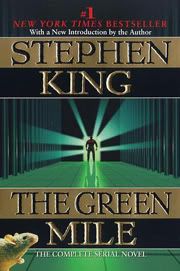
PhotobucketThe Green Mile: Famously done in a 'serial' format, it's an interesting cross between realism and fantasy for King -- which doesn't entirely come off, but there's a new maturity to his writing here. The tale of a prison guard, a mysterious "magical inmate" and his healing powers, it's very well told even if some of the more fantastical elements don't really work for me. Grade: B

Desperation: A demon takes over a small Nevada town, wreaking havoc on a small crowd of survivors. While not in King's upper tier, it's a decent, gory yarn, although the whole "magical child as savior" trope is really getting old. But it moves briskly for its length and goes down smooth enough. Grade: B-

The Regulators: A weird "rewrite" of "Desperation" by "Richard Bachman," King's pseudonym. A town slowly goes mad thanks to a demon's possession. I'd say by this point the Bachman gag has worn out its welcome -- not terrible, but not as good as "Desperation" and the split-novel parallel is nowhere near as interesting as King thought. Grade: C

Bag of Bones: One of King's best takes on love and loss and I'd argue the full flowering of King's more "mature" style we saw hints of in "The Green Mile." While it's a ghost story, King takes a gentler hand in his writing, working hard to develop character instead of shocks. If it weren't for a rather unsatisfactory conclusion I'd rank this among his best books, but it's well worth a read. Grade: B+

The Girl Who Loved Tom Gordon: A short story about a girl lost in the woods, padded out to novella length. On its own, not terrible, but not worth being a book on its own really. Grade: C

Hearts in Atlantis: One of King's finest works, and there's barely a monster to be found in it. A series of intercollected novellas loosely wrapped around the baby boomer generation. It ties in loosely to the "Dark Tower" series but the best of the stories are the ones that have nothing to do with horror -- the title piece, about a group of friends and their time in college, plucks the heartstrings like nothing of King's since "The Shawshank Redemption." Grade: A-
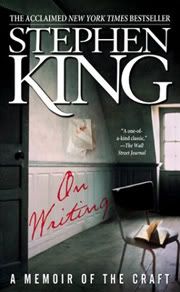
PhotobucketOn Writing: A Memoir of the Craft: Yes, "It" and "The Stand" are usually mentioned as King's best books -- but this very candid memoir/writers guide deserves a place in the pantheon too. Full of tips and confessions, it's some of King's most honest writing, a fascinating peek "behind the camera" and as gripping as any of his made-up stories. Grade: A+

Secret Windows: Essays and Fiction on the Craft of Writing: A rather under-the-radar "grab bag" of King works, many of them uncollected. Viewed as a kind of companion to "On Writing," it's not bad, although it's really one for the diehard fans and does repeat some of what's in other books. Grade: B

Dreamcatcher: It'd be hard to make any novel about aliens that erupt out of your ass palatable, and this one is a rare total misfire by King. It rips off aspects of "It," "The Tommyknockers" and "The Shining" and makes it a gooey, overlong mess, complete with mentally disabled character who just happens to have magical powers. One of my least favorite Kings, written while recovering from his near-fatal 1999 accident and really, it shows. Grade: D

Black House: Disappointing sequel to "The Talisman" by King and Peter Straub. It fails to capture the otherworldly wonder of the first book - returning to its protagonist Jack as an embittered adult - and even for King, this one is dark and frankly, dreary. And tying it into the "Dark Tower" series seems unnecessary, really. Grade: C
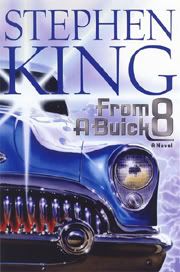
PhotobucketFrom A Buick 8: A teleportation device to another world disguised as an old car? This one is a rather underrated, concise bit of creepy sci-fi horror, with the punch of an old EC Comics story -- it's short by King standards and has a good bit of pure chills. I also frankly like how open-ended the mysteries remain. Good fun. Grade: A-

Everything's Eventual: The fourth volume of short stories and a decent set of yarns -- many originally printed in "The New Yorker" and have a bit more highbrow, Poe-meets-Lovecraft kind of feeling. The best of his recent story collections. Grade: B+

The Dark Tower - Books IV through VI: You can really only consider the final Dark Tower books as a thousands of page whole. I could have written an entire series of blog posts on the "Dark Tower" alone and feel bad to give them rather short shrift here, but suffice it to say it's King's magnum opus, a gigantic piece of work with tendrils connecting all over his other stories (some of the links work, some feel forced, though). The story of damned gunslinger Roland and his quest for the Dark Tower has a very different feel than most of King's tales, taking on aspects of Tolkien and other epic fantasies. What's particularly interesting about the Dark Tower as it works through the last three mammoth books is how King goes very metafictional -- including himself as a character at one point. "The Dark Tower" isn't a perfect piece of work, and probably could have been at least one book shorter, but its sheer scope demands attention -- and the ending, while perhaps less immediately rewarding than one might hope, is still utterly fitting and almost demands you go back instantly and re-read the thousands of pages before. Grade for whole saga: A

The Colorado Kid: A thin-as-piano-wire thread of plot animates this bloated-up short story about a mysterious death on the Maine Coast, part of the "True Crime" series. It's really just a 10-page tale strettttttched into 150-something pages by King's meandering. Grade: C-
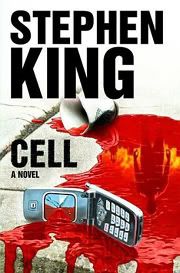
PhotobucketCell: Cell phones turn people into mindless zombies! A retread of "The Stand" but with a good and gory hook. "End of the world" books are almost always worth a read. It's dark and nasty but a good solid yarn, although the novel bogs down in a rather unbelievable plot once the whole "apocalypse" unfolds. Grade: B+

Lisey's Story: A love story but a flawed one -- with some of King's most annoying authorial tics in full flight. The narrator here, a woman who's lost her husband, uses an inane made-up language to describe her fantasy world; a device that could have worked but becomes incredibly wearisome over 500 pages. As a ghost story and a love story, King's done better in books like "Hearts in Atlantis" or "Bag of Bones." Redundant. Grade: C-

Blaze: As disposable as King gets -- an unpublished "Richard Bachman" crime yarn from the '70s dusted off and rewritten, and it reads like sub-par Elmore Leonard imitations. Really interesting only as trivia, and best left in the files. Grade: D

Duma Key: An excellent gem about redemption, and rehabilitation, using King's accident as a plot point. One of his best written novels and it's quite rewarded by using Florida as a setting instead of King's by-now cliched use of Maine. Grade: A-

Just After Sunset: More short stories! I'm afraid King's short stories haven't really zinged since about "Skeleton Crew," but more power to him for keeping up. This is probably his most uneven bunch, but "The Things They Left Behind," where King uses 9/11 as the engine to set a haunting story in motion, is among his best short pieces. Grade: C+
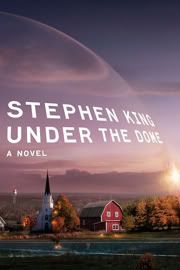
PhotobucketUnder The Dome: Hey, I just put this on my top books of 2009 list so I must have liked it. Basically what I said there -- good chewy King yarn, with a highly propulsive plot that speeds over any rough patches. It's impressive that after a few zillion words and more than 30 years, King still has the ability to craft a tale as readable and fun as this, really. I don't know where he's going next, but I'll stick along for the ride as one of his many Constant Readers. Grade: A-

Monday, December 28, 2009

Elementary, my dear Watson: Holmes endures

PhotobucketOne of my favorite discoveries of 2009 was the venerable Sherlock Holmes. Oh sure, I knew who Holmes was, how can you not?

But while I'd seen a few old movies/TV shows with the character I'd never really read the original Sir Arthur Conan Doyle tales or discovered their rich charm. I picked up a nifty omnibus in Melbourne a few months back collecting the whole lot of them, and have been slowly working my way through.

The stories are great fun, classic Victoriana adventure lit that reminds me of Jules Verne (whom I read the heck out of as a kid). Sure, they're formulaic, but it's a winning formula. Everybody loves a mystery.

With many Holmes movies the perceived stiffness of the characters renders them museum pieces to a modern eye; but even though Doyle was writing from a very prim and proper time I find his words pack more life than some of the adaptations have.

PhotobucketSo while it's no masterpiece, it's a pleasure to see director Guy Ritchie and a lively Robert Downey Jr. attempt to rejuvenate the legend in their new film.

Ritchie gives Holmes a good kick in the trousers, knocking off the Victorian dust that's settled over the years. Read closely Sir Arthur's original stories, and you'll see lines about Holmes' boxing prowess, his cocaine habit, his raw moodiness. There's little here in this zippy new "Holmes" that flies in the face of tradition.

Instead, it plays up the quirk that was already there. You get a seething, funny performance by Downey, all tics and constantly spinning mind. One of the movie's best gimmicks is showing how Holmes works out the best way to win a fight in his head before a punch is thrown. Downey is frequently the best thing about the movie, which is a bit overcooked by hyperactive director Ritchie.

Jude Law makes a sturdy, jaunty Watson, showing the character as less of a buffoon although he is frequently outmatched by Holmes' wits.

Rather than giving us some "Sherlock Begins" origin story this film jumps in with the detective well-established. The plot loosely revolves around a death-defying master criminal (a sinister Mark Strong) and a secret society, and tosses in Holmes' unease about Watson's impending marriage. As a kind of love interest, Rachel McAdams is Irene Adler, the "only woman who bested Holmes."

Sherlock Holmes has become an icon, like Batman or James Bond, who's open to multiple interpretations. While the new "Sherlock Holmes" film might be a bit jumpy and modern for some, it's just the latest in a long line of cases the great detective has taken on.

Tuesday, December 15, 2009

My favorite books read in 2009

So, here are a handful of my favorite books of 2009 -- a couple of which might've snuck out a bit earlier than this year but which are very much still worth reading regardless of publication date. There are many others that came out this year I haven't gotten around to as well -- finding a copy of Chuck Klosterman's latest down here is danged tricky, for instance.

But of the 75 or 80 books I read in 2009, here's what I liked best:

Photobucket"2666" by Roberto Bolaño and "The Savage Detectives" by Roberto Bolaño - For someone who's been dead since 2003, this Chilean writer has had quite a year. His last few books of fiction have been translated into English and they're not quite like anything else out there -- surreal and vicious and intense and passionate, he was one of Latin America's most exciting voices. "2666" is a monster of a book, nearly 1000 pages (and apparently not entirely finished before his death) divided into three parts, an apocalyptic and nightmarish journey that circles around a plague of serial murders in Mexico and a secretive German writer. Bolaño had a knack for creating a disturbing, unsettling atmosphere. It's an epic book and by the end I felt truly changed a little by it in some undefinable way, which is what the best stories do. "Savage Detectives" is "lighter" in tone than "2666" but also marvelous, a kind of Kerouacian road trip following two poet buddies traveling around the world. It's both idealistic and disillusioned at the same time, and Bolaño's twisting, gorgeous prose is in full swing.

The Prodigal Tongue: Dispatches from the Future of English by Mark Abley - People love to complain about how English is being "destroyed" by the Generations Y and Z, with all their LOLZ and txtspk. Abley genially upsets that assumption by painting a portrait of how English is always changing, always fluid, and how it has truly become a global language in the last few decades. In a great piece of anecdotal journalism he skips about the world looking at Japanese teens' "Japenglish," Hispanic Spanglish, the influence of hip-hop and the Internet, and how the way we communicate is constantly shifting. Instead of being debased, Abley argues that English is being constantly improved as a tool that works best for its particular audience at the moment. Thought-provoking and trivia-packed. (His "Spoken Here," about dead and dying languages, is also worth looking for.)

Photobucket "Pictures at a Revolution: Five Movies and the Birth of the New Hollywood" by Mark Harris - Five movies that don't seem to have a lot in common -- "The Graduate," "Guess Who's Coming To Dinner," "Dr. Dolittle," "In the Heat of the Night" and "Bonnie and Clyde." But they were all nominated for Oscar's Best Picture of 1967, a year that changed the movie industry. This fascinating book explores the genesis, production and reaction to all five movies, each of which symbolizes a different aspect of Hollywood, whether it's maverick independence or bloated studio extravaganzas. The fertile explosion of film in the '70s can be directly credited to movies like "Clyde" while the more calculated blockbuster mentality is seen in a stumbling vanity production like Rex Harrison's "Dolittle." Harris' smart and funny narrative is a must-read for any fans of movies.

"Under the Dome" by Stephen King - I know, a Stephen King book on my "year's best" list, there goes my literature street cred I carefully built up with the dead Chilean writer above. But "Dome," while not King's best ever by any means, is a great "cheeseburger" of a fiction read, a very fast-paced 1000-page epic about a small town in Maine and what happens when a mysterious giant dome is placed over it. Yeah, sounds like a "Simpsons" episode, but King deals it up with his trademark mix of horror, humor and invention and a fair amount of satire on the post-9/11 American mentality. Sure, characters may be thin and 1000 pages may be padded, but I'd still call "Dome" his best in several years and to use a cliche, I could barely put it down while reading it.

Photobucket Sunnyside" by Glen David Gold - I loved Gold's first novel, 2001's "Carter Beats the Devil," and it's been a long wait for his next book. "Sunnyside" is a challenging but quite satisfying read that entwines Charlie Chaplin, a would-be Hollywood stuntman, World War I and a cast of dozens of real-life and fictional personages of the 1910s. "Sunnyside" sprawls all over the place in its narrative that loosely explores the birth of the "modern" world of Hollywood, imagery and warfare, but it's Gold's portrait of Chaplin that holds the center -- his Chaplin is a confused, brilliant genius pulled in different directions by his muse.

"The Lost City of Z" by David Grann - Mysterious lost cities in the jungle of the Amazon? Sign me up! I've been on a big "exploration lit" kick for a while now and David Grann's stirring tale of the search for an ancient lost city is great fun. The focus of Grann's book is on legendary explorer Percy Fawcett, who disappeared into the Amazon in 1925 and was never seen again. Dozens -- perhaps hundreds -- of valiant explorers have also been lost searching for traces of Fawcett. Grann does a great job revealing the secrets of the world's hidden places and giving us rollicking real-life Indiana Jones-style adventure.

Photobucket "Juliet, Naked" by Nick Hornby - Hornby's latest novel is a nice return to his "High Fidelity/About A Boy" form after a few lesser books. "Juliet, Naked" is almost "High Fidelity 2" in how it digs into that strange world of music obsessives (um, not that I know anything about that), spinning a tale of fixated fans, reclusive musicians and lovelorn museum curators that's a real brisk, good-hearted and enjoyable read.

Monday, November 23, 2009

Complete Succinct Reviews of Stephen King, Part III

PhotobucketAs I just cracked open the 14,000-page monolith that is Stephen King's latest, "Under The Dome," I thought I'd get back to this occasional series. You can accuse King as a writer of many talents and some flaws, but nobody can ever argue that he's unproductive -- how many millions of words has he written in the last 30 years, anyway? An entire bookshelf in my house creaks with tattered King paperbacks. Yet this period, from about 1984-1994, saw a blue ton of new King works. For the first time, though, the endless churn seemed to affect his stories -- by the mid-1990s King's works were getting more bloated and less gripping. Nobody could keep up this pace forever, and King's life was going to change in a big way by 1999 with a near-fatal car accident.

PhotobucketThe Talisman: An unusual beast, a collaboration between King and author Peter Straub. Straub's voice seems to add a bit of surreal mystery as young Jack travels through a parallel world looking for a cure for his dying mother. A great fantasy novel with touches of King's gory reality, and a rare collaboration that really works. An unusual King book, but well worth seeking out. Grade: A-

Thinner: Another "Richard Bachman" pseudonymous piece by King, the last before his "secret identity" was revealed, and probably the best after "The Long Walk." A one-note idea -- nasty gypsy curse! -- but it's carried with a sinister charm and is a tight, fast and freaky read. Grade: B

Skeleton Crew: King's second collection of EC Comics-esque short stories, bitter little babies with hooky ideas. Some of these are just great, among King's best short fiction - "The Mist," "The Jaunt," "Word Processor of the Gods," the grotesque but very effective "Survivor Type." There's also a fair amount of filler and chaff but the gems here outshine the low spots. King's immense imagination in full flight. Grade: B+

PhotobucketIt: King's finest hour, even better than "The Stand" I'd say. An ode to childhood and a nightmare about the forces that end it, with King's best character work ever as he follows a group of lovable loser children into adulthood, and their ongoing battle against the forces of darkness -- in the incarnation of a serial-killing clown, of course. Well, clowns are creepy, aren't they? Anyway, in "It," King manages to have some of his most indelible characters, scariest moments and most inventive creations -- in other words, it's super-sized King at his peak. Biggest flaw - an ending that gets too mumbo-jumbo metaphysical for its own good. And well, yeah, it's bloody long, but in this case, it's a book I just didn't want to stop reading. Great books get to be as long as they want. Grade: A+

Eyes of the Dragon: It's almost "young adult fiction" for King, an unusual fairy-tale style fantasy story that's got ties to "The Stand" and a great deal of foreshadowing for styles and themes in "The Dark Tower" series. Very different than anything King had done up to this point; not as good as some of his later fantasy novels would be, but an interesting warm-up. Grade: B

The Dark Tower II: The Drawing of the Three: Not as stark and unique as the first book in the series, but King's wider canvas becomes apparent as Roland the lone Gunslinger starts to form a ka-tet, or family, as he continues his quest for the Dark Tower. Not a lot to say about this one that I didn't on the first -- this saga would eventually swell to seven books and thousands of pages, and become one of King's biggest statements. Grade: A-

Misery: One of the classics. While King is known to suffer from authorial bloat, "Misery" is tight, tense and unrelentingly claustrophobic. King, like a lot of fiction writers, has done the "writer as protagonist" cliche a bit too much, but this one really delves into the symbiotic tie between fan and creator, and Annie Wilkes is one of his best characters. Plus, I'd rank this as one of King's flat-out scariest tomes. Grade: A-

PhotobucketThe Tommyknockers: This tale of alien invasion in backwoods Maine (where else?) is rather disliked by many of King's fans, but I kind of enjoy it for its unrelenting bleakness and the sinister vibe of mystery set up by an alien ship buried for thousands of years that comes back to life. And I like that King steps outside the horror milieu into a more creepy science-fiction realm. It's not perfect (too long, and too many characters -- unlike "It," this didn't need to be 700+ pages) but I actually find this one of my more favorite Kings. I dunno, maybe I just like alien invasions. Grade: B+

The Dark Half: For me, this is where King enters a gentle decline for much of the late 80s-early 90s. (Some would say it starts with "Tommyknockers.") An author's pseudonym comes to life and starts a murderous rampage. While the dual identity idea is interesting, King doesn't say much truly new, and I'm sorry, but the conclusion of this novel just got ludicrous (sparrows?!?). Grade: C+

Four Past Midnight: Another collection of novellas, but nowhere near as good as "Different Seasons." "The Langoliers," about an airplane trapped in an alternate world slowly being "eaten," is the best of the lot, but "Secret Window, Secret Garden" is just another draft of "The Dark Half" and "The Library Policeman" just awful. Grade: C

Needful Things: This overwrought 1990 book was King saying "goodbye" to Castle Rock, the town that featured in many of his previous works (although he has continued to use small-town Maine as a focus for much of his work, so no big difference really). A mysterious junk-shop owner (Satan!) moves to town and commences to wreak havoc. Overly long, more mean-spirited than usual for King and it feels like a "Twilight Zone" episode stretched out beyond bearing. Grade: D+

The Dark Tower III: The Waste Lands: The Tower series really hits its stride here as Roland and his ka-tet travel through a series of strange and fascinating worlds. King's version of "Lord of the Rings," "The Dark Tower" combines his usual bloodlust and characterization with a pretty convincing fantasy realm. Grade: A-

PhotobucketGerald's Game: Or, "Misery Part II," with a woman instead of a man as the central character. "Gerald's Game" would make a very good short story, about a woman who, through a combination of accident and fate, ends up chained to a bed alone in her house in the middle of nowhere. It's got the same oppressive, tight feeling as "Misery," but I felt like it spins its wheels too much. Grade: C

Dolores Claiborne: The rare King novel I have no memory of having read, even though I'm sure I have. It's one of his least supernatural works, and well, if I can't remember it I can't grade it! Grade: Incomplete

Nightmares and Dreamscapes: King's third story collection, but not his best. It's a 900-page monster, but there are not as many little gems like "Survivor Type" -- although the visceral revenge saga "Dolan's Cadillac" is a brilliant piece. But something like "Chattery Teeth" (about just what you'd think) is just silly, and this one seems more of a motley grab-bag than other collections (a nonfiction piece about kids' baseball just seems out of place). Grade: C+

Insomnia: I think King starts to "come back" after a few lesser books here, and this novel marks the first time we really get an idea of the "King Universe," where the Dark Tower novels, many of King's novels and themes and characters are shown to be part of a giant puzzle that is unraveled in the final "Dark Tower" books. (The villain here is the Dark Tower's Crimson King, in another guise.) I like King's evocation of the main character's insomnia and the mythological links here; what I don't like is how cluttered the plot starts to feel and it ends up with another of King's mumbo-jumbo endings. Grade: B

Next time: "Rose Madder" to the present day

Wednesday, September 30, 2009

...Which is why I will never believe anything on the Internet ever again.

PhotobucketSo for about five minutes there, it seemed David Bowie was going to be playing New Zealand and Australia's Big Day Out festival next year, and all was good in the world. I knew it was a fact because the Internet told me so. Why, Stuff said he was "expected to be announced" as the headliner for the music festival. Of course, it was bollocks -- no Bowie in the final Big Day Out lineup, sigh. I'm actually a bit relieved as while I did have a fantastic time in 2008 and in 2009 at the Big Day Out, I wasn't really planning on going a third year in a row unless the lineup dazzled my innards. This year's crew -- Muse, Lily Allen, Kasabian, Mars Volta, Dizzee Rascal -- well, it just makes me actually feel my age a bit as the only one I'm even slightly familiar with is Lily Allen. Anyway, that's about $300 we can save for more grown-up pursuits. Like seeing The Pixies when they come here in March! But y'know, it was amazing to see how quickly this Bowie rumour became fact on the Internets as so many others do these days. Even though Bowie hasn't gone on tour or released an album in nearly 6 years, apparently it was a given that he was going to be making his big comeback at age 62 in New Zealand. The meme even actually overtook the actual lineup as the festival organiser had to make a statement about the non-appearance of Bowie.
* Had to steal the art above from here. Which is a real website.

• I heartily recommend Nick Hornby's latest novel "Juliet, Naked," which is a nice return to his "High Fidelity/About A Boy" form after a few lesser books. "Juliet, Naked" is almost "High Fidelity 2" in how it digs into that strange world of music obsessives (um, not that I know anything about that), spinning a tale of fixated fans, reclusive musicians and lovelorn museum curators that's a real brisk, good-hearted and enjoyable read. I like how Hornby integrates online fan communities and even Wikipedia into his story without it seeming like a pandering attempt to be "hip," and his portrayal of has-been '80s musican Tucker Crowe is one of his strongest characters to date. If you haven't checked out Hornby's books in a while, this is one to go to.

• Also a fine if incredibly trippy read is "Batman: The Black Casebook," a way-out collection of utterly bizarre 1950s Batman stories reprinted to tie in with writer Grant Morrison's recent "Batman R.I.P." storyline, which was heavily inspired by this. I know everyone's into Batman the Dark Knight who stalks Gotham City and never smiles, and I like that guy too, but I have to admit I really have a soft spot for the incredibly strange Batman stories of the 1950s, when Bats would be as likely to be fighting aliens, go back in time or hire a dog to be his crimefighting companion. PhotobucketThis "Black Casebook" is a very affordable survey of the era, which hasn't really been explored in reprints as much as it should be – apparently it reminds too many of the time when Batman was, well, a bit goofy. But Grant Morrison in his excellent introduction looks at these stories with an eye for just how odd and unsettling they are – such as when Batman stumbles into the parallel dimension of Zur-En-Arrh and meets an alternate, bizarrely coloured Batman, and the story has the passionate madness of a fever dream. There's also the introduction of magical elf Bat-Mite (who rapidly became annoying, but was indeed a funny little fellow in his first appearance), the "Batmen of All Nations" (meet the Italian Batman, the Legionary!), and much more. What I think I love the most about this era of comics is that anything could happen without the menace of "continuity" without pandering to a small and demanding fan community. Whatever worked -- if it meant turning Batman and Robin into leaves or zebras. The surreal appeal of these stories is like a Salvador Dalí painting. "The Black Casebook" is terrific nostalgic fun and a nice tonic for endless "gritty" stories featuring the Joker slaughtering people. Bring on "Black Casebook II" and reprint more of these lost gems.

Tuesday, September 1, 2009

Complete Succinct Reviews of Stephen King, Part II

Photobucket...As I continue strolling my way through re-examining my near-complete collection of Stephen King tales, I'm entering the period of King's biggest popular success, I think -- somewhere around the early 1980s, King became that household name, and every book was an "EVENT," which sustained up till around the end of the decade. He's still a huge, bestselling author now, but after 50 or so books, it's hard to make each one seem a major happening. This era, in between the more typical 'monster of the week' books like "Cujo," saw King doing some experimentation, and some of his strongest work – the straightforward horror-free fiction of "The Shawshank Redemption," the stark fantasy-land of "The Dark Tower"– came here.

PhotobucketThe Dead Zone: A personal favorite of mine, the tale of poor doomed John Smith and his psychic powers, it's a tight and tense thriller (it avoids the bloat that affects too many of King's books). This one packs a bit more of an emotional punch than some of King's yarns -- I find Smith a compelling hero, who loses a huge chunk of his life and ultimately faces a martyr's fate. The plot may not be the freshest -- how many times can someone head off a nasty alternative future? - but King's voice is strong and assured, and there's moments of real chilling horror. Grade: A

Firestarter: A minor King work, I'd say, but enjoyable in a pulpy way. The tale of fire-starting "mutant" girl Charlie has a straightforward momentum, and a made-for-movie feel (although like 99% of the movies based on King's books, the film is inferior). Yet while it's good fun to read, it never quite leaps from fun to masterful -- the villains are cardboard and the story a bit predictable. Underachieving, frankly. Grade: C

Cujo: Another "minor" King book, but what's remarkable about this one is how incredibly bleak it is -- no happy endings here (foreshadowing the even grimmer "Pet Sematary"). A rabid dog is no global plague or killer clown as far as King's villains go, but "Cujo" does tap into something primal and freaky about the perils that lurk in the natural world all around us. King himself notes in a later book that he was so heavy a drinker at this point that he barely remembers writing "Cujo," which explains why it feels a bit like a short story stretched to the breaking point. Grade: C+

PhotobucketDanse Macabre: Then out of left-field, we've got a nonfiction collection by King, examining the history of horror fiction in print, radio and film. It's a great behind-the-curtain look at King's influences, with a chatty tone that evokes Harlan Ellison's essays, and also a treasure trove of information for anyone interested in horror as a genre. Great pop-culture history and analysis, well worth seeking out. Grade: A

The Dark Tower Book I - The Gunslinger: "The man in black fled across the desert, and the gunslinger followed." It's a fantastic first sentence, and kicks off what would become a 20-year, thousands of page epic for King -- a dark, thoughtful and lyrical fantasy, set in a mysterious other world where Roland the Gunslinger is on an epic heroic quest to destroy the Dark Tower. Filled with myth and mystery, it's a taut, superb read. Now, the later books in this series get increasingly complex and long, and you can debate whether the series as a whole "works," but as a first tale, this is a remarkable story, in tone and approach unlike anything else King had done up to then, and a sign his interest lay deeper than rabid dogs and zombie cars. (King later revised the book in 2003 to tie in with the later novels more, but I haven't read that version.) Grade: A

Different Seasons: This might just have been the first King book I ever read, and I still think it's one of his best, four novellas, three of which have gone on to be generally fantastic movies (a rarity for King adaptations.) "The Body" became "Stand By Me," the clunkily titled "Rita Hayworth and Shawshank Redemption" with a shorter title became one of the most popular movies of the 1990s, and "Apt Pupil" is a terrific underrated Bryan Singer film. The stories are all actually even better than the solid movies – in "The Body" King gives a pitch-perfect voice to being a boy growing up, and the twisted Nazi obsessions of "Apt Pupil" result in one of King's freakiest tales. If you ignore the fourth novella in here, the gross "The Breathing Method," you've got one of King's best. Grade: A-

Christine: Another curious kind of minor monster-of-the-week book -- killer possessed cars, anyone? -- that makes up for its pulpy gimmick with a decent portrayal of a loser teenager's revenge against all who've wronged him. But it still feels like King is spinning his wheels, pardon the pun. Grade: B-

PhotobucketPet Sematary: A great book, and a horrible book all at once as King pushes the reader as far he can in a tale that takes on the borders between life and death. What would happen if you really could bring people back to life? It's a take on the old horror yarn "The Monkey's Paw," with King really digging deep into the rot beneath to find the horror of someone who comes back to life.... different. The ending for this one is one of King's finest and most terrible moments. A confession: I've been meaning to re-read this, but now that I have a kid of my own, I don't quite know if I could take it. Grade: A-

The Bachman Books: An interesting collection of King's pseudonymous, early work (dating 1977 to 1982), it's a mixed bag but includes some of his strongest novellas -- "The Long Walk," in particular, is superb, a chilling piece of nihilistic science fiction, while "The Running Man," (which has next to nothing in common with the cheesy Schwarzenegger movie) imagined reality TV years before the fact. On the other hand, neither "Roadwork" or "Rage" (a clumsy kind of Columbine mass killer story) have the maturity to really come off. Grade: B+

Not reviewed: "Creepshow" graphic novel and "Cycle of the Werewolf," King's two story/art collaborations with artist Bernie Wrightson, because it's been far too long since I've read either of them and "Creepshow" in particular is regrettably hard to find.

Next time: "The Talisman to "The Tommyknockers"

Tuesday, July 7, 2009

Complete Succinct Reviews of Stephen King, Part I

PhotobucketWhenever I'm asked about my favorite writers, the answers are different depending on what day it is. But there are constants, and usually, my favorite writers would have to include George Orwell, the late John Updike and Kurt Vonnegut, Haruki Murakami, Paul Auster, and... Stephen King.

That last one doesn't always seem to fit to everyone when I say his name. Unfairly, King has somehow been lumped in with the Wal-Marts and Starbucks as ubiquitous shorthand for American junk culture. I think King surely gets the short shrift as a writer; he isn't a literary gamesman like Auster or Updike, which he would gamely admit, but he is one heck of a storyteller. King's books to me have always brought to mind cheeseburgers -- nothing rare, nothing fancy, but done right it can be the perfect meal. He knows his strengths, and can tell a heck of a yarn to while away the hours with.

I'm a big King fan, and although not quite in the "superfan" realm of having to read every vowel the man has ever typed, I have read pretty much all of his books, under his own names or pseudonyms. And King can soar or he can slum it -- but I don't feel like he's run out of steam yet. While his books aren't quite the "event" they once were, some of his later works stand up there with his best earlier ones. Here's part one of an occasional series of Complete Succinct Reviews of Stephen King:

PART ONE: 'Carrie' to 'The Stand'
PhotobucketCarrie: King's first book is gimmicky and raw, but the story of doomed Carrie has all the hallmarks King would develop -- empathy, gruesome gore and propulsive momentum. It's interesting how this one uses some experimental storytelling techniques (letters, newspaper accounts) to flesh out the story. However, I've always felt like it kind of lacks real character definition -- even Carrie, for all her sad drama, is a bit sketchy. Grade: B-

Salem's Lot: Still finding his way, but this spin on the vampire legend is starting to feel more like "classic" King. A big sweeping cast of characters, grim creatures from the past coming back to haunt a small town, and nasty deaths and carnage galore. It's also extraordinarily bleak, a tone King would come back to in later work such as "Pet Sematary." Evil in King's books is rarely truly defeated for good, and "Salem's Lot" gives us a glimpse of how dark it can get out there. Grade: B+

PhotobucketThe Shining: And here King truly explodes forth. Sure, we've seen the movies (both versions) but the original book is still the best take on Jack Torrance's endless winter in the Colorado mountains. Rich with detail and moody feeling, I feel this is the first time King really manages to break beyond pulp fiction and tap into something primal (the thing in the bathtub -- brr!). It's hard to read this now without summoning up Kubrick's wonderful but very different movie, but the original book is still one heck of a fine ghost story. Grade: A-

Night Shift: King's short fiction is sometimes overlooked except as raw material for some truly terrible movies, but the early stuff has the pulpy horror of the EC classic comics -- nasty monsters, twist endings and horrible ironies galore. This was one of the first King books I ever read, and I still remember the horrible queasy chills I got reading "Graveyard Shift," a tale about... well, giant rats infesting an old mill. There's a gritty charm to this first collection of his short terrors, even if a few fall short of the mark. Grade: B+

PhotobucketThe Stand: The first "800-pound gorilla" of King's career, and arguably, his best (tied with "It" for myself). It can be said that King's tried to top this one ever since, with lengthy quest sagas such as "The Dark Tower." While there are bumpy bits for me in the narrative (Nick's sudden fate, the rather clunky ending), the characters here are rich and likable, and King summons up one of the most captivating "end of the world" narratives I've read. If you pick it up now, it's all a bit dated but the top moments -- almost anything involving laconic Stu, the scorched-earth evocations of a dead America -- still ring with a bright passion. Be sure to read the "uncut" version which adds a mere few hundred pages more than the original edition. Grade: A+

Wednesday, June 17, 2009

Harlan Ellison: Dreams With Sharp Teeth review

PhotobucketHarlan Ellison is a loudmouthed, righteous man. This few who know of him will argue. But he's also a fiery, wonderful writer, one of the best authors of essays and science fiction I've ever read.

Ellison has written dozens of fantastic stories, novellas and screenplays, such as the famous original "Star Trek" episode "The City On The Edge of Forever." He leaves his unmistakable mark all over evocatively titled tales like "I Have No Mouth But I Must Scream" and "The Beast That Shouted Love At The Heart of the World", and his epic, impassioned nonfiction could give a lot of writers lessons on how to persuade and antagonize with mere words on a page. At age 75, he hasn't mellowed one bit.

One of my favorite Ellison quotes is "We are not entitled to our opinions; we are entitled to our informed opinions." That kind of sums up his eternally boat-rocking view of the world. He doesn't care about the feathers he ruffles, having been described as "possibly the most contentious person on Earth."

Now finally out on DVD, the labor-of-love documentary "Harlan Ellison: Dreams With Sharp Teeth" is a movie that attempts to explain Ellison to the world. Filmmaker Erik Nelson assembled it from years of footage dating back to 1981, and spent a great deal of time interviewing Ellison – which is mostly a case of just standing back and letting the man talk. It's Ellison warts and all, without apology or canonization. We see his friends (including famous names like Robin Williams and Neil Gaiman) and his legendary house, a gloriously overstuffed fanboy's paradise of 70+ years of toys, books and memorabilia.

Photobucket"Dreams" rises above just being one man's monologue by showing some of the pain that shaped Ellison, a short, scrawny, wise-mouthed kid who got beat up "every single day," whose father died gruesomely in front of him when Ellison was just a teenager. Ellison is one of those people who believe too hard, and who when wronged react with a fire that scorches the very earth. At one point, in mid-rant, Ellison kind of breaks off, and admits he doesn't want to just be the angry guy, the ranter, but he simply can't bear being taken advantage of, being mocked or made a fool. It's a telling, honest moment, one that helps humanize him as more than just a shouting voice.

Nelson also gives a lot of time to Harlan the writer, with Harlan storming through a series of lively readings from his work. His readings aren't just recitations, but dancing, vivid recreations of the passion that exists in every syllable. While "Dreams" is more about Harlan as personality over his literary worth, it gives you enough to make you want to re-read your old paperbacks and hunt out new ones.

"Dreams" doesn't touch on some of the many, many controversies involving Ellison in immense detail, but it does enough to give you the picture -- if he's a friend, he's a friend, but if you piss him off, lawyers are standing by and he's more than willing to bash a skull or two. (Among his victims/enemies are Fantagraphics Books, the Terminator franchise, Walt Disney, the I, Robot movie and many more.) Tellingly, Harlan's enemies aren't really given a chance to tell their side here, but that's not really the point.

I wouldn't want to live with Harlan Ellison, but he's been an immense influence on my own writing and how I view the world. I admire his strength and his voice, even when it's a bit too sharp and certain for his own good. An entertaining rant of a film, "Dreams With Sharp Teeth" is the portrait he deserves, for better and for worse.

The trailer, which gives you a taste of Ellison's distinctive voice:

Saturday, June 13, 2009

Every day, every day I read the books

I am a rather huge bibliophile, with an ever-growing cascade of books filling the house. Periodically I clear some out only to have others fill it. At one point I imagined that moving to New Zealand, where books are generally a good bit more expensive than the US, might mean I bought less books. Silly me.

PhotobucketOne of the great things about Auckland is the used book fairs that are held a handful of times a year, giant fundraisers for worthy causes like the Red Cross or Rotary. Needless to say I hit as many of these fairs as I can, where you can get a dozen books for under $20. There is a tactile pleasure in browsing row after row of used books (usually 5 million copies of "The Da Vinci Code" and "Future Shock" peppered throughout), looking for the rare gems you seek. I like the humble pleasures, and the smell of used paperbacks and the rustle of pages is satisfying to me. I am pickier now than I once was as Avril points out that we keep running out of bookshelves, and besides, quality over quantity and all that.

Today's haul:
"Martin Amis, The War Against Cliche, Essays And Reviews 1971-2009" - I quite like Amis' tart nonfiction and this is a big hefty sampling of it.
"Absolute Altitude: A Hitch-Hiker's Guide To The Sky" by Martin Buckley – Sometimes you pick a book by its cover. This tale of flying oneself around the world seemed interesting.
"Entertainment Weekly's The 100 Greatest Entertainers 1950-2000" – A pretty, glossy picture-kinda book taken from one of my favorite US magazines. Nothing deep, but nice to page through.
"On Her Majesty's Secret Service" by Ian Fleming – I've been working my way through the original Bond books.
"Careless Love, The Unmaking of Elvis Presley" by Peter Guralnick – The second half of his excellent Elvis biography. I read this years ago through the library – it's the "and fall" part of Elvis' life – and figured for $2 I wouldn't mind reading it again sometime.
"Pride and Prejudice" by Jane Austen – Can you believe for a bibliophile, I've never read this book?!

Wednesday, March 4, 2009

No shirt, no shoes, who cares?

PhotobucketPass the cheesecake -- I just recently found out about this grand online documentary by Joe York on Oxford, Mississippi's late great Hoka Theatre, "Sorry We're Open." For anybody who ever passed through Oxpatch in the halcyon daze of the 1980s and 1990s, the Hoka was one of the best places in town to pull in for a spell; a highly ramshackle former cotton warehouse-turned-alternative movie theatre/hangout and restaurant, run in a charmingly relaxed fashion. Like many Oxonians I spent many a night there, eating cheesecake and checking out "Pulp Fiction" and "The Piano" for the first time, watching cowpunk bands and dealing with the er, temperamental projectionist Barton. York has made a swell short documentary that features many familiar Oxford faces and a salute to a now-closed, now-demolished piece of Oxford history. (It's hilarious to see my old editor/boss Chico interviewed credited as a "Hoka Archivist/Conservationist!") I've lived many a place and many a country, but in my memories Oxford is the friendliest place I ever called home. The Hoka was a big part of it. "I never felt bad at the Hoka," as Ole Miss's Sparky Reardon says.

• A wonderfully-written piece by Stephen Rodrick in New York magazine about Mountain Goats frontman John Darnielle and his extremely devoted fans, one of the best pieces of music writing I've seen in a while.

• Another excellent magazine article, this one about the late writer David Foster Wallace and the work he left behind. As good an answer we may get to the question of why he killed himself last year and a requiem for an extraordinary talent (plus welcome news of his final unfinished work "The Pale King," which will be released next year).

Wednesday, January 28, 2009

John Updike, 1932-2009

PhotobucketJohn Updike is dead, and I think today the title of America's greatest living writer is vacant.

I first discovered Updike right around my freshman year in college, when I tackled his "Rabbit" novels one after another, chewing them down like the best meal you ever had. Probably it was around then that I really started to realize that I wouldn't mind spending a great deal of my life ahead reading books like this, that "literary" books, the fancy kind you usually read for school rather than for fun, could transform you a bit. The "Rabbit" series follows the life of one Harry "Rabbit" Angstrom, former basketball star, from young and married to aging and retired over four utterly amazing books, one for each decade from the 50s to the 80s. Every five years or so, I take these books down from the shelf and read them again, because I've discovered that the older I get the more I discovered about Updike.

I wrote a lengthy term paper on one of my favorite of his books, the underappreciated "Memories of the Ford Administration," the research for which was like taking a bath in Updike. I wandered around the thickets of his sentences, casting about for clues that fit my thesis. And during college, I read a lot of Updike -- the fine short story collections, each piece a honed little diamond, the dense novels, the constantly curious and questing non-fiction. As he aged he began to branch out into material like quasi science-fiction ("Toward the End of Time") and Shakespearean riffs ("Gertrude and Claudius"). Always, a keen intelligence animated his work. When I first read Updike, I constantly got the feeling of being stunned about how one man could know so much, have so many words in him.

His style might have started to seem poky and antique to some - sex and infidelity continued to be big themes for him long into the age of the Internet - but even in his less remarkable works I'd always find dozens of sentences that filled me with amazement. He managed to be both ethereal and crude, writing with equal passion about everything from death to used cars to masturbation. He saw fine lines everywhere.

My father-and-law and I were just talking about him the other day, and I loaned him a copy of Updike's remarkable memoir "Self Consciousness" to read. Such was his remarkable prolificness that I could never quite keep up with Updike's output -- there's probably still a dozen of his 50+ books I haven't read. Plenty of company to keep in the years ahead when no more books are forthcoming.

Goodbye, Mr Updike, and thanks for the words. From "Rabbit Run":

"His hands lift of their own and he feels the wind on his ears even before, his heels hitting heavily on the pavement at first but with an effortless gathering out of a kind of sweet panic growing lighter and quicker and quieter, he runs. Ah: runs. Runs."