Showing posts with label 33 1/3. Show all posts

Saturday, March 17, 2007

The reject department; or, the book you'll never read


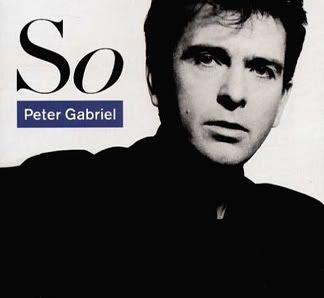
So just for the heck of it, a couple months back I submitted a book pitch as part of the 33 1/3 music-lit series call for proposals. I figured I only had a slight chance of getting accepted as the last time they did this they had 100 proposals. Turns out I had an even slighter chance because this time they received 450 (ack!) proposals, and unfortunately, mine, to do a brief book on Peter Gabriel's "So," didn't make the cut.

I'm not particularly bitter about this, though, because in the world of book pitches failure is the rule, and compared to the qualifications of some who've written in this series (which I've written about many a time before), I'm pretty bush league. And while I was able to do a proposal, I did have some performance anxiety over actually doing an entire book on "So." I do still quite dig the series and their take on albums from the Beatles to the Beasties to Bowie to the Ramones.

But as the very graceful rejection e-mails began circulating a bunch of us "rejectees" started posting their un-accepted proposals on their blogs*, figuring heck, might as well have someone read 'em. So what the hey, I'll do the same here - I had fun trying to write this thing about one of my top 10 albums of all time, even if I look at it as a little more stilted and vague than I probably should've done it in hindsight. (Of course, you can second-guess this forever - do I suck? Or the editors just hate Peter Gabriel? Or maybe, the fact that I was 1 of 450 [again, yike!] just means the odds weren't in my favor).

Anyway, here's what I might've written if the gods had smiled my way (pitch edited a bit for length and extraneous details):

PETER GABRIEL'S SO - A 33 1/3 proposal by Nik Dirga

“So”?Photo Sharing and Video Hosting at Photobucket

I’ve listened to Peter Gabriel’s “So” so many times that each beat feels imprinted in my DNA. In my freshman year of college, in a strange town in a new place, it was the album I turned to again and again; the comforting homilies of “In Your Eyes” and “Don’t Give Up,” the winking bravado of “Sledgehammer” and “Big Time,” the cathartic release of “Red Rain.” It’s an album I’d listen to without respite, trying to coax what felt like definite connections to my life from random phrases in the music. “So” feels vast and soaring yet very, very intimate.

It’s the sound of a man wrestling with himself, trying to find confidence in an uncertain world. “So” was a slick curiosity – an experimental artist’s bid for the mainstream, combining brassy top 40 pop with melancholy explorations of the self. Daniel Lanois’ glittering, dense production gave “So” a very 1980s polish, but it adorns a disc that’s intensely thoughtful, intellectually curious and still bears the imprint of Gabriel’s challenging early solo work. (Even the queen of 1980s art-rock, Laurie Anderson, makes a cameo on “So,” as if offering a benediction to Gabriel’s bid for superstardom.)

“So” was a turning point in Gabriel’s career from the mask-filled showmanship of his earlier work into a more introspective place. Banished was the paranoid dread of Gabriel’s first four albums. Instead, “So” asks questions, with yearning, anthemic pop-rock miles from the social statement of “Biko” or eerie Motown-meets-bedlam rant of “Shock The Monkey.”

Gabriel’s own experiences with therapy sessions for his failing marriage led him in this questing direction, away from the very British emotional repression of his youth and toward music as emotional statement, rather than just metaphorical play (see the worst excesses of Gabriel’s time as leader of the band Genesis for samples of this). “So” avoided banal obviousness, but Gabriel still strove to see clearly where he once layered myth and mystery.

The songs of “So” stay grounded in Gabriel’s own raspy, authoritative voice. He wants to win over the masses, find happiness and remain true to himself as he eyes the prize – or, as the sly oh-so-’80s satire of “Big Time” puts it, “My heaven will be a big heaven / and I will walk through the front door.”

Even the album cover celebrated this tentative openness – Gabriel’s face was clear and unmutilated for the first time in his work. In his eyes there’s a kind of hopeful fear, a desire for acceptance and calm. Despite firmly following his own muse, Gabriel wanted “So” to be a hit. It was, to the extent some fans claimed “So” stood for “sell out.” Gabriel called it “creation as therapy.”

The personal and the abstract mix fluidly, so a song like “In Your Eyes” can be seen as boy-meets-girl adoration or a greater paean to a higher being altogether. The poetry of Anne Sexton is an influence (“Mercy Street”), as are the harrowing psychological experiments of Stanley Milgram (“We Do What We’re Told”). “So” was crafted with a diamond precision, yet still allowed for improvisations like Youssou N’Dour’s legendary cameo on “In Your Eyes,” which came unplanned from a studio visit. I’d like to try and interview some of the musicians who played on “So,” including guitarist David Rhodes and drummer Manu Katché, about their memories of it.

But you can’t explore “So” without delving into the videos, which are an integral part of the experience. Gabriel’s music has always had a keenly imagined visual side – dating back to his elaborate stage shows and costumes with Genesis. His earlier solo videos were often impressionistic nightmares; in celebrating his playful side with “So” he broke through. “Sledgehammer” and “Big Time” became some of the medium’s most inescapable hits.

“Sledgehammer” was a delightfully lusty, subversive take on sex and boasting, and ably took the piss out of an entire medium. The sequel, “Big Time,” is an even more dazzling kaleidoscope of imagery. In the video-driven 1980s, Peter Gabriel’s visionary work stood at the peak, setting a standard that was rarely equaled. For a few minutes, artists like Gabriel seemed ready to truly transform music video into something more than addled performance videos and bikini-clad dancers.

I’d like to look more closely at the fusion of video and song in “So,” perhaps by talking with some of the producers behind the videos and examining the symbolism and subtext within them. And I might ask, do videos take away from the music itself? You can’t hear “Sledgehammer” without seeing the video in your head – and is that a good thing? Or was Gabriel anticipating the world of YouTube, iPods and mp3s with his fusion of sound and vision?

Gabriel’s career post-“So” has been all about taking music further – in his soundtrack work, pioneering multimedia presentations and extravagant touring shows. Unlike many artists, Gabriel didn’t capitalize on his biggest hit in the expected fashion – his follow-up to “So” was the esoteric, entirely instrumental world music soundtrack to Martin Scorsese’s “The Last Temptation of Christ,” and it was six years before his next proper pop album, “Us,” was released. He could’ve had the world after “Sledgehammer,” but turned to charity work, multimedia and founding his Real World label, becoming what’s been called an “experience designer.”

“So” as a personal totem in my own meandering life. “So” as a multimedia landmark in a trailblazing music career. “So” as a smash hit, with hugely creative videos that married popular success with avant-garde imagery. “So” as personal journey, hopes and fears given public airing.

“So” what? I’ll tell you more about what “So” means if you choose me to write this book.

(Pitch ends) Ah well - maybe someday I'll pitch another book for this series. So it goes!

*Just in case you're curious, here's a bunch of other proposals posted:
The Jesus And Mary Chain, "Psychocandy"
Jerry Lee Lewis, "Live At The Star Club, Hamburg"
Butthole Surfers, "Locust Abortion Technician"
Bonnie "Prince" Billy, "I See A Darkness"
Lou Reed, "Metal Machine Music"
Cheap Trick, "Dream Police"
The Dukes of Stratosphear (aka XTC), "Chips from the Chocolate Fireball"
Buffalo Springfield, "Buffalo Springfield Again"
Sufjan Stevens, "Illinoise"
Phish, "Hoist"
"Shaft" soundtrack

Update 3/21: Here's the final 20 or so of the books chosen, in case you were curious. Bummed to see I'm not on there of course, but am excited to see books about Big Star, Pavement, Elliott Smith and Public Enemy in the hopper. (And I must show my ignorance by saying who the hell is Israel Kamakawiwo'ole??)

Tuesday, December 12, 2006

Assorted linkbloggery


Wow, we move to this side of the world and Australia bursts into flames and Fiji has (yet another) coup. Can the rise of Sauron be next?

So we had our first New Zealand camping trip this weekend, to the gorgeous little peninsula of Tawharanui about 80km north of Auckland. Being New Zealand, it rained on us much of Saturday but the weather here is such that if you don't like it, wait 10 minutes and it'll be completely different, so there were some nice spells, and Sunday was utterly gorgeous. There's approximately eleventy-billion beaches in New Zealand to explore so that will keep us busy for many weekends. Go check out some photos over at my Flickr page!

...Very strange to see that for the second time in a year a family got lost in the woods of Oregon not too far from where we used to live. The tragic tale of the James Kim family seemed to be top news everywhere I looked on US web sites last week. It was odd to see our former home of Oregon once again take center stage – the road they were stranded on, this very remote quasi-highway between the coast and Grants Pass, was the same exact road Avril and I drove on a little more than a year ago (our account of it was told here). Where James Kim died was just an hour or so south of Roseburg. I remember thinking at the time we drove on that curvy, curvy little road how easy it could be to get lost there – and that was in September, well before the snows. For many folks it's pretty inconceivable that you can get lost, lost for good, in modern America - but there's still a lot of remote places out there.

Over on BlogCritics you can find two swell reviews I've done recently that I haven't posted here -- go henceforth and read!
"LoudQUIETLoud: A Film About The Pixies," a swell documentary covering the band's 2004 reunion tour.
"33 1/3: Nirvana's In Utero" by Gillian G. Gaar is a nifty pocket-sized look at the grunge band's finest hour, in my humble opinion. Check it out!

Thursday, April 20, 2006

MUSIC: The Pixies and Beastie Boys
get the 33 1/3 treatment


I admit, my music tastes weren't real cool in 1989. It was the start of senior year in high school, and "edgy" for me was Depeche Mode. One of my big thrills my senior year was going to a Billy Joel concert. I bought a T-shirt. Heck, I still have a soft spot for "We Didn't Start The Fire" today, but these days my music radar is a bit broader than it used to be. In 1989, I had no clue that I missed out on two of the seminal albums of my time – The Pixies' roaring manifesto Doolittle, and the Beastie Boys' psychedelic mix tape Paul's Boutique.

I actually got The Pixies' Doolittle by mistake in 1990 as part of a record club I was in … didn't know quite what to make of this clattering, screeching CD, and it took me a few years to get into it. Paul's Boutique I didn't discover until the mid-1990s, when the Beastie Boys finally lost the frat-boy image after hip-hop blasts like Check Your Head and Ill Communication. Now, both of these two very different albums are high up in my list of Desert Island CDs.

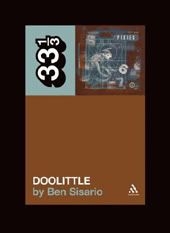
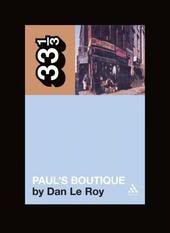
So hats off to Continuum Books' fab 33 1/3 music-criticism series, which examines the Pixies' and the Beasties' 1989 slabs of sound in two new books. Each slim 100-page-or-so book in the series dissects a particular CD, like liner notes on steroids. The Pixies book by Ben Sisario and the Beastie Boys book by Dan LeRoy are both swingin' samples of the series' rock-geek eye for minutiae and big-picture grasp of the trends and visions that go into the albums we love.

Click here
LeRoy's Paul's Boutique volume will hit the spot for Beasties fans, many of whom still consider the Beastie Boys' madcap second CD their best. LeRoy establishes the revolutionary sophomore record Boutique was. The Beasties made their name with loud, thrashing proto rap-rock like "Fight For Your Right To Party," but the leering goons in the early videos weren't really who they wanted to be. Paul's Boutique was the response to those who thought they'd pegged the Beasties as one-hit wonders – a still-remarkable collage of samples, slick multi-referential rhymes and an ever-shifting soundscape. A tune like "Sound of Science," built almost entirely of riffs by none other than the Beatles, still kicks it today.

LeRoy painstakingly reconstructs how Boutique came to be. He builds a pretty strong case that Boutique can be considered a strong collaboration between the Beasties, the Dust Brothers and reclusive producer Matt Dike, who had assembled the sample-filled bones of some of the songs on his own even before the Beasties came along. That helps explain why Paul's Boutique doesn't sound quite like anything else the Beasties ever did. It also pretty much bombed in 1989, coming nowhere near the success of the Beasties' License To Ill and only gaining its current shining reputation over time. LeRoy provides a guide to some of the arcane samples peppered throughout the album, noting it's "impossible … to comprehend in its sprawling totality." Paul's Boutique is a gorgeously dense piece of work, and LeRoy explains how post-1989 changes in sampling laws mean nothing like it will ever quite happen again. Given the confines of a 128-page book, LeRoy can't be utterly encyclopedic about the disc — and sometimes a broader picture of the Beasties' influences and inspirations is lacking – but he is pretty darned solid at showing the voices and ideas that went into it.

Click here
The Pixies, unlike the Beasties, didn't become truly famous until they'd broken up. Their "prickly kind of pop," Sisario notes, wasn't ever Top 10 material, but influenced many (notably Kurt Cobain, who idolized the band). Their second album proper, Doolittle, is a jagged, glistening knife of a listen, strangely sunny despite the loud-to-soft howls of frontman Charles Thompson (aka Black Francis) and titles like "Debaser," "Gouge Away," "There Goes My Gun" and "Mr. Grieves." Seventeen years on, Doolittle – originally titled Whore – still sounds fresh and fiery. Sisario shows how the Pixies' unique alchemy rocketed them to "next big thing" status, and how they soon imploded in the usual ego and fame struggles.

Sisario really manages to capture some of Thompson's elusive personality as he road-trips with him around his Eugene, Ore., home. He illuminates some of the thinking that went into the songs that became alt-rock anthems, and he goes after Doolittle's twisted lyrics with a scholar's eye. It might spoil the mystery of the songs a bit for some, but I found it fascinating to learn that, say, "Crackity Jones" is about Thompson's demented former roommate. Few secrets of Doolittle remain untold under Sisario's probing. Sisario heavily examines the influence of Surrealism on the Pixies' voice – Thompson ate up filmmakers like Buñuel and David Lynch, and his frenzied lyrics captured a kind of senseless joy and pain. Or, as Thompson himself puts it, the appeal of the Pixies lay in their "sex and death vibrations." Sisario's sharp analysis and exploration of Doolittle makes this 33 1/3 tome a must for Pixie-heads.

Both books suffer a tiny bit by not having the full bands' cooperation – the Pixies' Kim Deal refused to talk to Sisario, and only Mike D of the three Beasties spoke on the record to LeRoy. Yet that doesn't really matter too much. These 33 1/3 books aren't meant to be an all-inclusive band biography. Both authors bring to their task an easygoing yet authoritative voice. Reading these books, it's like it's 1989 all over again for me, and I can pretend I'm finally kinda sorta hip.

Saturday, April 1, 2006

ETC.: Keeping the faith


...Oh thank the lord, it's Friday. Both my editor and city editor have been on vacation all week which basically means yours truly is theoretically in charge of putting out a daily newspaper. It's been pretty smooth, fortunately a slow week except for a political scandal or two, but I am ready for the weekend. Here's five things that kept me going this week:

Image hosting by Photobucket1. Hurray for death and despair! Season 5 of "Six Feet Under" finally came out on DVD this week, and we've been burning through it at Netflix. Not being rich enough to afford the HBO, since Season 3 ended we've been forced to wait for the DVDs. What a bleak and beautiful show this is. The first episode alone features dead housewives, miscarriages, senility and gay adoptions! If it hadn't been one of the best written and acted shows on the air, it'd be just too depressing to endure. Now we finally get to see the final season! (Yeah, I've heard about the acclaimed last episode, but now I can see it.)

2. I love that 33 1/3 music-writing series, but "33 1/3: The Replacements' Let It Be" by Colin Meloy might be my favorite in the series so far, despite not following the series' typical parameter of being about the creation of and analyzing some of the best albums of all time. Instead, Meloy, the frontman for the cult Portland band The Decemberists, delivers a sharp, funny and poignant memoir of growing up in Montana and how music, including the Mats, helped save his life. Full of great little details of what it was like to be oddball and growing up in the early '80s, "Let It Be" is a fine read even if you've never heard the Replacements.

3. Another TV show that I hadn't caught on air but can now see through the miracle of DVD is Seth Green's bizarro "Robot Chicken" series from Cartoon Network. A ramshackle ode to pop culture with random offensive short skits featuring animated action figures, it's great fun. Not every skit is a home run, but I ask, how can you go wrong with "The Real World: The Super Friends," featuring a suicidal Aquaman? Or a "Cannonball Run" takeoff that ends with "Ponch" from "CHiPS" getting decapitated? Glorious.

4.
Hurray, I finally got in the mail the new super-sprawling box set "RT: The Life And Music Of Richard Thompson", 5 jam-packed discs covering 30+ years of music by England's finest modern guitarist. I've barely dipped into the massive set, which is extremely well done by Britain's Free Reed Records – besides the five discs, almost entirely devoted to rarities and live takes of Thompson's best, it includes a huge 160-page book, plus a free voucher for a sixth disc of tunes to add to the set. In terms of doing justice to its subject, it's just about the best box set I've ever bought (closest runner-up being the Velvet Underground's "Peel Slowly And See," containing pretty much everything that band ever recorded). I'll be listening to this a lot in coming weeks getting ready for my date with Mr. Thompson May 9.

5. Post-comeback Roy Orbison. Man, you can't go wrong with his lonesome late 1980s tunes like "You Got It," "Mystery Girl," "I Drove All Night" and more. I've been soaking up the Orbison with the spiffy new "Essential Roy Orbison" 2-CD set, which I just happened to review over at BlogCritics this week. Go here and read the review; I'll be sitting here in the dark with my sunglasses on.

Wednesday, November 16, 2005

MUSIC: Everything you ever wanted to know
about David Bowie's "Low" but were afraid to ask


"Writing about music is like dancing about architecture," Elvis Costello famously once said, but heck, even if it's chasing ghosts, I love reading solid rock criticism. Done well, a writer can give you a new view of an old tune, or turn you on to something you've never heard before.

The 33 1/3 series by Continuum Books takes music writing and distills it down to its essence. They're short chapbooks devoted to analyzing the story of a single great album, through history, interviews, essays or even fiction. They're tiny, just under 5 x 7 inches and about 125 pages each volume, and they're oh so darned cute. The series so far has tackled everything from Springsteen to the Velvet Underground to Joy Division to DJ Shadow to The Beatles. The series' free-form nature can sometimes lead to indulgent intellectual meandering, but most of the books I've read so far have been tight, informative and insightful. (A complete list, including some future titles and proposed ones, can be found right here)

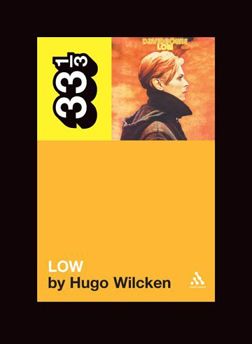
Image hosted by Photobucket.comAnyway, up in Portland last weekend I picked up one of the newest 33 1/3 volumes, a look at David Bowie's "Low" by writer Hugo Wilcken. Soon as I saw that "Low" was now part of this series, I didn't hesitate to grab that puppy off the shelf. Readers of this blog know I'm a big-time Bowiephile, and "Low," Bowie's 1977 landmark, is right near the top of my favorite Bowie albums. In its glacial cool and soulful angst, "Low" never gets old to me. Recorded just shy of 30 years ago, it's still futuristic and strange, combining dreamlike pop with machine-like instrumentals, punk flavors, ambient drift and hypnotic rhythms, and sparse lyrics following the drifting of a lost soul. Perhaps the best quote I've ever read about "Low" comes from Bowie himself in Wilcken's book — it captures "a sense of yearning for a future that we all knew would never come to pass."

In the "Low" volume, Wilcken does a very solid job of establishing the context from which "Low" sprung — Bowie's drug-addled, near-catatonic mental state at the outset of recording, his family history of mental illness, collaborators like Brian Eno and Tony Visconti, Kraftwerk and other angular music that influenced him, the artistic scene of mid-70s Berlin, and all the other little pieces that created this unusual album. Bowie, the noted chameleon, strips away his masks throughout "Low," and the album shows the deterioration of language as a medium of communication. Only about half the songs even have lyrics, although they're among Bowie's strongest — the bouncy "Sound And Vision," yearning "Be My Wife," world-weary "Always Crashing The Same Car" — but words fade and the entire second side is instrumental. By the great "Warszawa," Bowie has crumbled into an imaginary language that predicts the music of a modern band like Sigür Rös by decades.

"Low" is one of those rare records that's only grown in power and reputation over the decades. A world used to Ziggy Stardust and the Thin White Duke didn't know what to make of this crystalline, lonesome Bowie sound. (Wilcken uses the word "autistic" to frequently describe Bowie's behavior in this disc, which may sound inappropriate but really sums up the transformation of the Bowie character during the song cycle.) Wilcken's "Low" meets the magic benchmark of music criticism for me — it gives me new appreciation for an album I already deeply loved. If you're a fan of enterprising, long-form music criticism, these 33 1/3 books are well worth a shot. Pick one about an album you dig and give it a spin.