
And so it begins.
...Note on box saying it comes with "deflector shield"!
Say it with me now... "ewwwwwwwww."

 Which leads to the Worst Neighbors Ever. I'm a finicky guy about my peace and quiet, and like to think I'm considerate of my neighbors. I don't ask a lot, just don't wake me up in the middle of the night or sell drugs. I've had a few neighbors that made me rethink my anti-gun position. After one too many nutbags, I vowed a few years back I would never ever live upstairs or downstairs from someone ever again. And so it has remained. Not all neighbors have been hell, but here are my picks for
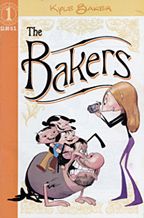 "The Bakers" – featured in both graphic novels and single comic books – are a whimsical family cartoon, semi-autobiographical, and a little like an actually hip and funny version of "The Family Circus." It's the adventures of Baker, his wife and their three young children, and the strips don't tend to be "about" much – Mom gets a birthday present, Dad plays a game with the kids. It's the commanding style and craft Baker brings to his work that raises them to gorgeous cartoon art. Baker's influenced by the classic "gag strips" of the '50s and earlier, but gives them a modern spin."The Bakers" are wacky, gently wise and always amusing.
 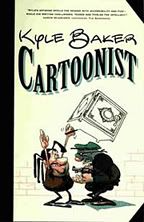 Baker impresses by his constant changes in style. His earlier work was pen-and-ink based, shadowy and expressive yet fairly traditional. But in recent years, his work has exploded into a newfound looseness, and he's one of the pioneers of using computers as a drawing tool. He's one of the best caricaturists out there (one of the many hats he wears is doing a great deal of magazine illustration work), able to bend from full-on cartoons to slightly exaggerated neo-realism. "Kyle Baker: Cartoonist" Volumes 1 and 2 present a heaping helping of "The Bakers." Baker's art goes rubbery and fluid (Baker draws himself as a kind of dreadlocked, roundish genial goofy Dad) in these and his equally amusing one-panel "gag" cartoons.
 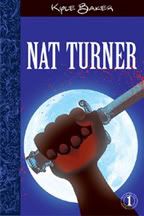 The pastoral pleasures of "The Bakers" are what make "Nat Turner" such a shocking turn. Based on the failed 1830s rebellion by former slave Turner, it's unflinching in its look at the horrors of slavery. The first issue of a planned four-part series dramatizes Turner's family history from Africa to slavery, with a harrowing journey on a slave ship. Issue two shows the young Turner and his religious awakening that led to later violence. Turner and his followers would kill more than 50 white people before being executed themselves, blood turning to blood.
 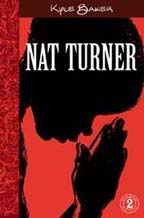 Baker tells this tale with almost no words at all, letting the images unspool like a nightmare. As the series progresses, Baker mixes his art with text excerpts from "The Confession of Nat Turner." "Nat Turner" isn't easy to read, full of horrible brutality against slaves. (With the concluding half likely to be even more graphic.) It's the polar opposite of the warm 'n' fuzzy "Bakers," but it's full of truth – and frankly, this ugly time in American history needs to be remembered every once in a while. Baker slaps you in the face with the evil of slavery; it's harsh, unforgettable stuff.
  You know how kids love to fixate on things? Well, my 2-year-old Peter is addicted to “Wallace and Gromit.” The short films starring the lovable British clay animation characters are one of his favorite things in the world to watch.
 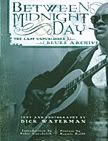 Took me until a few months ago to find out that Dick has a book out. (So it goes when you move away from the South and don't keep in touch like you should.) But when I learned about his 2003 book "Between Midnight And Day: The Last Unpublished Blues Archive," I rushed to find a copy.
 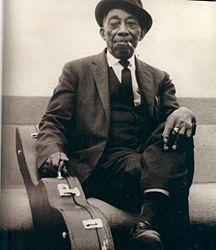 Dick's photos were often included with his music columns, and I don't think at the time I realized just how priceless a resource they were of a rapidly vanishing age of music. As the old folks die off, few other than B.B. King are around to evoke that classic Mississippi Delta blues. But Dick knew them all, and his archives were filled with candid, remarkable shots of blues legends like Skip James, Junior Wells, Otis Rush, John Hurt, Arthur Crudup, as well as '60s rock legends like Jagger, Joplin, Clapton and more. One of my personal favorites is this one of Mississippi John Hurt, sitting in a station somewhere with his guitar, looking old as the hills.
 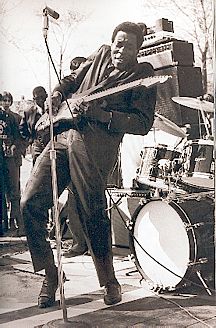 Dick's photo albums are the record of an age, when blues met rock and forever influenced it. Yet the photos were kind of forgotten down there in Oxford, Mississippi, where we'd use them as art to spruce up our tiny alt-weekly. Crisp and sharp black-and-white, they showed Dick Waterman's eye for the moment. Have to admit, we kind of took 'em for granted (I did get to borrow a really fine image of B.B. King by Dick for one of our "Oxford Town" t-shirts, though).
 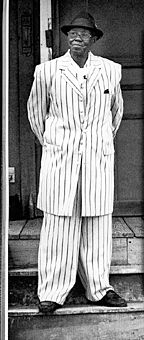 Dick never really felt like he was bragging in his writing; it was more that he was just telling stories. Sure, they'd feature appearances from everyone from Muddy Waters to Son House, and when he was talking about "Bonnie" it was Bonnie Raitt. I actually learned a nice bit about column-writing from Dick's easygoing, conversational style. It was great to see some of his gems, such as the tale of humble Arthur Crudup, re-worked into essays for this book. There's at least another book's worth of his columns to be had. (Dick apparently also has another book he's contributed to that just came out last fall which I haven't seen yet — "The B. B. King Treasures : Photos, Mementos & Music from B. B. King's Collection" —timed for B.B.'s 80th birthday.)
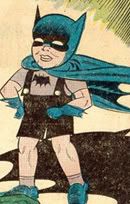 • Oh my lord, I have to read this comic someday. The Very Worst Batman Story of the Silver Age, which features the debut (and dare I say, only appearance) of the following: Batbaby. Y'see, Batman's turned into a baby by an evil criminal, and, well... OK, it was the fifties. Found at Silver Age Comics, who have enlightened me in ways I dare not speak of.
 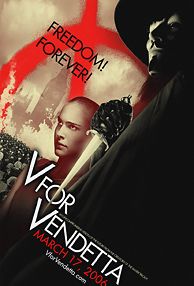 Do the ends justify the means? That's the question of "V For Vendetta," which shows us a dark future where America is destroyed and a fascist regime has taken over England. Out of the oppression rises a masked revolutionary, V, who promises to bring back freedom.
 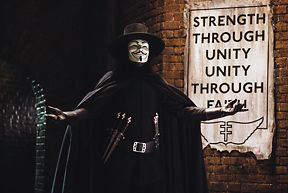 Moore has disowned the movie, which is a bit of a shame, because it's by far the best of his works made a film. (His name doesn't even get mentioned in the credits, which even though I know it's his fervent wish, feels a bit wrong to me – the man did come up with 90% of the movie's ideas, after all.) This is no "League of Extraordinary Gentlemen" abomination – it hits most of the graphic novel's plot points, and feels sincere, striving to be a bit more than your typical action blockbuster. It takes superhero-movie cliches, such as saving the damsel in distress, and twists them in interesting directions — what if the guy who saves the girl is also totally insane?
  Natalie Portman is excellent as Evey Hammond, who goes from shy by-stander to co-revolutionary under V's tutelage. Portman is a fine actress whenever she's not in a George Lucas movie, and her work here – from wallflower to catharsis – is heartbreaking. She plays off Hugo Weaving (Agent Smith in "The Matrix), or rather, Weaving's voice, which is all you ever get from the masked V. Weaving wrings a lot out of a character that doesn't even have moving lips, and is a verbose, vivid force of nature as the vicious V.
 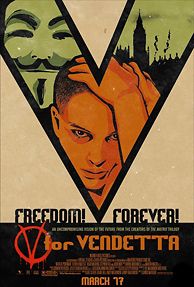 In general, the Wachowskis sand off some of the deeper edges of Moore's work, making it less internal. V is softened up a bit from the cool, vague visionary of the comics (whenever V starts to show emotion here, it feels tacked on). Many of the plotlines from the book are "Hollywooded" up. The bad guys are all very bad (John Hurt is seedy and demonic as England's future ruler), with few of the human touches Moore gave them, and V is a little too saintly for a mass murderer.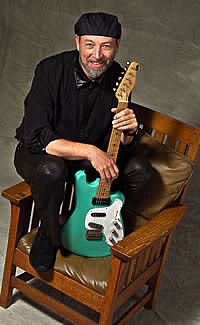
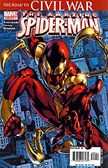 Amazing Spider-Man #529. After the colossal mess that was "The Other" crossover, this issue doesn't look so bad. The big deal, of course, is that Spider-Man gets a new high-tech costume this issue courtesy of his bestest friend Iron Man. While obviously the costume is a passing phase, and nowhere near as iconic as the old red-and-blues or even that underrated '80s black costume, it's an interesting development. Writer J.M. Straczynski's run the past five years or so has been all over the map for me; he's written some great stories and also some of the worst Spider-Man stories ever. What I like about this issue is the interesting mentor/student relationship Spidey's forged with Iron Man, not at all what I might have expected out of Spider-Man's membership in the Avengers. While that whole idea's been mixed in execution, at the very least it's offered some new dynamics for the Spider-Man mythos to chew on. Mostly set-up for the upcoming "Civil War" crossover (yep, another one), this issue isn't a classic, but it's promising enough. Grade: B-
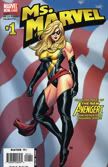 Ms. Marvel #1. It's like 1979 all over again lately, as all the old superheroines from that era are making comebacks. Joining Spider-Woman and She-Hulk in new books is Ms. Marvel, who's always been a good character in search of a decent comic book. This first issue is a solid launch... female superheroes have always walked the line between sex objects and actual heroic characters, and Ms Marvel's stripper-meets-Mardi Gras costume doesn't help matters. Yet writer Brian Reed's got a nice hook, presenting Ms. Marvel as a "B-list" hero who desperately wants to live up to her potential. This issue is mostly set-up along those lines (Ms. Marvel hires a publicist!) but it's got some good crackling dialogue, a nice sense of characterization and eases up on the cheesecake. Plus, slimy aliens The Brood invade! There's a good idea here and it'll be interesting to see if this survives the "curse of the solo female character" comic book – after all, Ms. Marvel's original series back in the day only lasted 25 issues or so. Can Ms. Marvel battle reader indifference? Grade: B
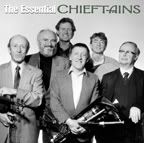 If there's a lack of green in your wardrobe, consider loading "The Essential Chieftains" on your iPod this St. Patrick's Day to celebrate your Irish side ... and avoid any unwanted pinches. This new two-CD, sprawling anthology features the best of Ireland's leading band. For novices unsure where to begin with the band's approximately 40 albums over the past four decades, "The Essential Chieftains" is the place to start. This compilation focuses on their work from the 1960s to 2003, collecting for the first time together their work on several different record labels. "The Essential Chieftains" is nicely split into two complementary discs: "The Chieftains' Roots," focusing heavily on more traditional instrumentals, jigs and reels, and Disc 2, "The Chieftains and Friends," which includes collaborations over the years with a cast of all-stars including Sting, Elvis Costello, Ricky Skaggs, Alison Krauss, Jackson Browne and many more. If you're wanting that classic pipes-heavy, cheery Irish bounce, Disc 1 offers it in spades. Disc 2 has the sound of a slightly tipsy, mad all-star jam that lasts for hours, and the many voices contributing to the Chieftains sound gives it a nicely diverse feel. Particular highlights include Van Morrison's clarion voice on "Shenandoah," Irishwoman Sinéad O'Connor on the magnificently epic "The Foggy Dew," and Skaggs's countrified turn on "Cotton-Eyed Joe." You'll also find The Nitty Gritty Dirt Band, Béla Fleck and Nanci Griffith popping up on Disc 2. The Chieftains long ago reached beyond Ireland's borders for influences - you'll find guest stars like a Chinese ensemble in a track from 1987's "The Chieftains in China," or a Spanish flavor to the jaunty "Guadalupe," which features guest spots by Los Lobos and Linda Ronstadt. Chieftains aficionados will appreciate the survey of their career this 35-track set offers, but it's perhaps even better for newcomers — who can get a healthy sampling of one of the leading popularizers of world music. (Want the full review? Head over to BlogCritics and read it here)
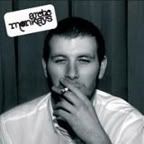 Hype is a two-headed beast. It can bite you as easily as it can help you. Britain's The Arctic Monkeys are Exhibit A in this week's installment of The Hype Show. Their debut CD, "Whatever People Say I Am, That's What I'm Not" has gotten enough ink to singlehandedly blacken the entire British Isles. These Monkeys have struck a chord in Britain, where they've become the country's fastest-selling album of all time. In the U.S., not so much -- they debuted at #34 in the first week. The hype probably is leading to a bit of an anti-hype backlash – I mean, NME, Britain's music cheerleader, had a poll of readers who named this album the #5 British album of ALL TIME – greater than any Beatles, Rolling Stones or Who album. Um, yeah, OK. So if you go in with that trivia factoid, you'll probably be disappointed by the Monkeys. But here's the thing – it's a decent CD, full of energy and raw talent. It's nowhere near worthy of the insane hype the British press put on it, of course, but it's a perfectly enjoyable collection of slamming punk-pop songs, taking equal cues from The Sex Pistols, Green Day and Franz Ferdinand to create a gritty, street-level look at being young and foolish in England 2006. It's all launched by crunchy angular guitar riffs, punkish sing-along choruses, and the nasal snarl of frontman Alex Turner's voice. Turner, 19, has that angry teen poet thing down, and his singing is snotty and packed with attitude. Yet there's also a current of sly intelligence running under the Monkeys lyrics. The booklet is filled with grey scenes of their Sheffield hometown, a dull, eternally overcast landscape full of kids with nothing to do. The propulsive first single, "I Bet That You Look Good On The Dance Floor," is full of pogo-worthy guitar licks, while "A Certain Romance" mashes up punk rock with a Kinks-esque look at dreary old England. Will they succeed in America? I can't imagine they'll get beyond cult status, because they feel so very British that the iPod American generation might not identify with them. Yet "Whatever People Say" clearly speaks to a generation of English blokes in the same way that Green Day's epic "American Idiot" is tailor-made for a group of our kids. It may not exactly be novel – it's a brand of the same English angst that's been pimped ever since John and Paul picked up a guitar — but it gets your fingers tapping.
 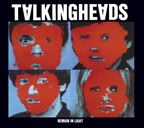 The Talking Heads' "Remain In Light" is often considered their finest moment, and 26 years after its original release, it still sounds as fresh and new as it did in 1980. Rhino Records has newly re-released the entire Heads catalogue on DualDisc, in gorgeously clear sound and with bonus tracks and DVD video extras. "Remain In Light" was called the fourth-best album of the 1980s by Rolling Stone magazine. Its fusion of dank jungle rhythms, chirping electronica and fragmented chanting vocals have been influential on bands for years. "Remain In Light" came as producer Brian Eno, singer David Byrne and company were perfecting their mix of angst-ridden danceable pop. Nervous as hell, filled with hooks and innovation, it's a frantic masterpiece — in fact, I'd argue it was their creative peak, as co-writer and producer Eno moved on after this album, and the unique mix of energy was never quite the same in the remaining Heads records. The remastering here is fantastic. The primal African drumbeats that ground the album are crisp and you can hear every lick by the Heads' sterling rhythm section, led by bassist Tina Weymouth and drummer Chris Franz. And then there's the wonderful centerpiece of the album, "Once In A Lifetime." Über-critic Robert Christgau called this "the greatest song Byrne will ever write," and it's hard to argue when it comes to this witty and wise little tune that sounds more relevant to me every passing year, with Byrne's quizzical, stunned refrain: "And you may ask yourself — well ... how did I get here?" What may surprise newcomers to "Remain In Light" is how organically "Once In A Lifetime" grows from the jittery unrest of the entire album. There's also four "unfinished outtakes" on this reissue — "Fela's Riff," "Unison," "Double Groove" and "Right Start." They're kind of like sketches of finished songs, but provide a great insight into the band's creative process. If all you know of the Talking Heads is a handful of great songs, "Remain In Light" is the place to start to get the richer experience. (Want the full review? Head over to BlogCritics and read it here)
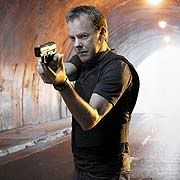 • ITEM! Ultra-violent, near-fascistic and frenetic as all hell, "24" is rapidly challenging "Lost" for my favorite drama on television these days. We sat through a mini-marathon catching up on the last several hours of "24" over the weekend, and then watched last night's episode as well. The bloodshed! The brutality! The manliness! Jack Bauer's world is gleefully cartoonish and over-the-top, yet played with utter straightness by the cast, including the incredibly good Kiefer Sutherland (Could anybody else sell the inate lunacy of Jack's 24-hours-o'-mayhem like Sutherland does? The man is fantastic). In the last two episodes alone, we've seen three major cast members killed off as this season's battle with the terrorists hurtles along. All this and the return of '80s stars like Peter "Robocop" Weller, C. Thomas "Soul Man" Howell and Ray "Twin Peaks" Wise! Season 5 might just be the show's best yet, as the producers have managed to balance nonstop movement with a little more human drama and slightly more plausible plots (and thankfully, no more cougar attacks). Gregory Itzin's weasely President Logan is a particular delight. "24" is a thrill ride, one even a softy liberal like me can enjoy despite its rather conservative bent (Torture a suspect? The question isn't whether to or not, but how many fingers Jack Bauer will take off). It's not a world I'd want to live in (and I certainly wouldn't want to work at CTU, the elite counter-terrorism unit that has all the social skills, ego tripping, panic attacks and cliques of your average high school senior class), but it's a great blast to visit for an hour each week.




 Yesterday we had a lot of fun visiting the Auckland International Cultural Festival, just down the road from my in-laws' house. Huge event featuring people of pretty much every variety except Amish, tons of ethnic food, dance and more. Auckland is a hugely diverse city (there are parts of downtown I can walk and swear I'm in an Asian town), and the festival had folks from everywhere - Ethiopia, Finland, Kurdistan, China, Chile...



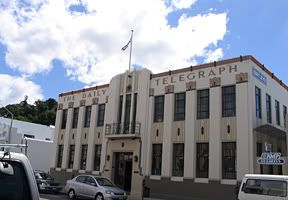
 You'd have to read about halfway into this grim story to learn the stabbings occurred in Asia, not downtown Auckland. Not that that mediates their awfulness, but it does show a fundamentally different approach in coverage to our staid -- sometimes dull -- middle American approach. The NZ papers are closest in kin to New York City's fiery New York Post and other tabs, I think. It's an approach I wonder if I can fit in with, although I'm adaptable.
 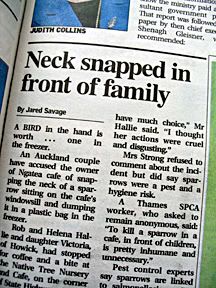 They definitely sensationalize a bit more here -- why have a traffic jam when you can have "Road Rage Chaos In Jam From Hell", as a headline a few weeks back said? Or take this gem from Sunday's paper, at right. Of course, the story is actually about a bird whose neck was snapped, traumatizing an entire family of kiwis: "An Auckland couple have accused the owner of Ngatea cafe of snapping the neck of a sparrow sitting on the cafe's windowsill and dumping it in a plastic bag in the freezer." Definitely unpleasant, but the headline kind of gives you a rather different impression than bird-icide, doesn't it?