Friday, November 26, 2010

Five-sentence Friday

Photobucket1. This is super-duper cool, and it's great to see my father-in-law Sir Peter Siddell's art career anthologised in one huge hefty package, coming in early 2011 -- I've seen the proofs and the book looks fantastic!

2. Keith Richards' autobiography "Life" makes for entertaining reading, although a bit too rambling, it's got a remarkable story to tell and he holds little back; great insights into his relationship with Mick Jagger to be found here though.

3. Some band called U2 is playing just down from the road to us this week on their 360 tour, and I'm just not quite huge enough a U2 fan to spring for tickets -- but it turns out we didn't need to, as the concert, also including opening act Jay-Z, was quite loud and audible from our house 3km away, so we pulled out lawn chairs and blankets and sat on our front lawn last night for a live U2 show, without even having to leave our driveway!

4. The Pike River mining tragedy has obviously dominated New Zealand news for the past week, and while we all feared the worst, we hoped for the best; a distinct sting to the situation was added by the fresh memory of the recent Chilean miner rescue miracle, but unfortunately the NZ mine was a completely different type of mine and situation and such a happy outcome seemed unlikely from the start. My sympathies and good thoughts remain with the families of the Pike River 29.

Sunday, November 21, 2010

Concert Review: The New Pornographers, Auckland, November 20

I was an avid fan of pornography last night. The New Pornographers, that is, the Canadian indie-pop collective who played an excellent show at the Kings Arms in Auckland last night.

PhotobucketThat band name is a bit of a joke -- there's not much immoral about this band, who for five albums have been exploring the pleasures of hook-filled, harmony-laden energetic pop. The main players are leader Carl "AC" Newman, Neko Case, Dan Bejar and Kathryn Calder, all of whom have had considerable success on their own. If you put Squeeze, Big Star, Cheap Trick, ELO and The Beatles in a blender you might get something like this all-star alt-rock grouping.

It was a hot, humid Auckland spring night, with sweat dripping off everyone. The Kings Arms is a right tiny, intimate place so I was less than 10 feet away from Case the entire time. The show had a freewheeling, relaxed vibe. Between the heat and probable jetlag by the seven-member band it took a few songs for the momentum to really get going and the sound was muddy for a few tunes. (The bass player actually missed getting onstage for the first song, which the band only noticed at the end of the song!) There were a couple of false starts, but there was an energetic good cheer despite the hitches. Throughout the night Newman and Case bantered snarkily with the audience. But like a steamroller, the band kept locking into these fantastic harmonic grooves where the combination of voices and their wall of sound approach blew the crowd away.

PhotobucketThe set featured a heaping helping of songs from their most successful album, 2005's near-masterpiece "Twin Cinema". Newman led the show and did a great job crunching on guitar chords and trading off lead vocals with Case. It was a real pleasure for me to finally see siren Case, who's built the most successful solo career of the group. Her voice is justly famed and to hear her wailing out just a few feet away was awesome.

The Pornographers ramped through many of their best tunes such as "Use It," "The Bleeding Heart Show" and "Challengers." I've always liked how Newman's songwriting combines pop accessibility with twisting, strange lyrics, and as a live show the songs hit sweet spot after sweet spot. Nothing quite like the harmonies Newman, Case and Calder could conjure together. (And I'd think it's quite hard to reproduce live a note-perfect whistling chorus like they did in "The Crash Years" from their latest album "Together.") Sadly missing from this tour was glam-pop singer Bejar, who crafts some of the band's most addictive songs, but Newman did an excellent job filling in on Bejar's sneery vocals on songs like a crowd-pleasing encore of "Jackie Dressed in Cobras."

Here's one of my favorite of their tunes, "The Bleeding Heart Show."

Monday, November 15, 2010

"Alone: Bad. Friend: Good." The genius of Boris Karloff

PhotobucketIt's a little late for Halloween, but I've been in a monster movie frame of mind. The classic monster movies, that is, which to me have always been the Universal Pictures horror of the 1930s to 1950s -- Frankenstein, Dracula, The Wolf Man, et cetera. I loved 'em as a kid in the 1980s and lately have been on a jag watching some of these classic black and white flicks for the first time in 25 years or so. What's amazing is how well many of them still hold up, particularly those starring the man who I'd say was the king of monster movies -- the original and best Frankenstein's Monster, Boris Karloff.

Bela Lugosi's immortal Dracula seems to get more ink today, and Lon Chaney Jr's tragic self-loathing Wolf Man was also great, but Boris Karloff created a monster who defines horror. Try not to imagine Frankenstein's Monster as the cliched star of everything from breakfast cereals to video games to really bad Hugh Jackman movies. Instead picture the Monster as he first appeared in 1931, looming from the darkened screens. An abomination against life, a morality tale about man's desire to play god, a creature cursed for the way he looks.

The very first scene when we see the Monster in "Frankenstein" is remarkable. The Monster simply walks into a dark and gloomy room, almost unnoticed for a fraction of a second -- then the camera abruptly quick-cuts inward, two beats, to an extreme, silent close-up of Karloff's heavy-lidded, haunting eyes. It's still chilling 80 years after it was filmed. Karloff's portrayal is a marvel of economic emotion, terror and innocence all bundled together. The physicality Karloff brought to the Monster defines it; the locked-kneed, lurching walk, flailing hand movements, the monosyllabic grunts and groans.

PhotobucketThe famous "monster meets the blind hermit" sequence in "Bride of Frankenstein" is a bit hard to watch without bias today because Mel Brooks' "Young Frankenstein" did such a glorious job of sending it up, but try to picture it as it seemed in 1933. It's an amazing little character arc, as the Monster learns and grows an astounding amount in just a short time, from guttural grunts to emotion-packed short sentences. Treated with brief kindness, we see his potential, which makes what happens next that much more stinging.

The naked emotional need of the blind man and the Monster is startling. But what we're seeing here is a real attempt at human connection between two utter outcasts, a connection that is of course shattered by the outside world's cruelty. "Alone: bad. Friend: good." That line could have sounded awful done wrong, but Karloff puts just the right spin of hope and sadness on it. The genius of Karloff is in full flight in this scene, as he's alternately savage, needy and rocked with childlike glee. He helped form the whole "monster you feel kind of sorry for" motif we've seen everywhere from "King Kong" to "Twilight."

Karloff's skill is more notable when you compare his portrayal to that of other actors who've played the Monster -- in the many sequels to the 1931 movie we saw actors like Glenn Strange and Lon Chaney Jr. take on the role, but they lacked that almost-sweet innocence Karloff brought. What was a character of real tragic depth became the more familiar lumbering monster we now know, still cool, but not quite as shocking and strange as the half-human Monster Karloff created in the first three films. And Frankenstein's Monster on film since has never quite managed the power of the Karloff years.

Monday, November 8, 2010

Nik's Unheralded Albums #3: Colin Hay Band, "Wayfaring Sons."

Colin Hay Band, "Wayfaring Sons." (1990)

PhotobucketIt's hard being perceived as a one-hit wonder. You put out an album, it does a zillion in sales, but you can never quite get that popular mojo back. Witness Men At Work, the Aussie "Down Under" combo who were huge with "Business As Usual" in 1982, but kind of gradually faded away within a couple years. But for those who were fans, lead singer Colin Hay has actually done some pretty interesting work since then. He did two more Men At Work albums, mild hit "Cargo" and the darker and quite underrated flop, now out-of-print "Two Hearts." Then the band broke up and he went solo.

I've enoyed Hay's solo career intermittently -- he's written some beautiful, laid-back tunes, although many of his albums seem to contain an awful lot of filler in between the gentle gems. (Lately he's taken to doing "unplugged" version of many of his old Men At Work songs which are pretty to listen to but lack much in the way of novelty.) The sitcom "Scrubs" used several of his tunes to give him a sort of comeback. But one disc I've always had a soft spot for is a fairly obscure one, 1990's "Wayfaring Sons" by the Colin Hay Band.

I first heard this one in the waning days of my Men At Work fandom, and it always sparked in me a powerful feeling of wanderlust. Loosely it's a concept album about traveling the world, voyaging the seven seas, with several songs about leaving home and coming back again. It relies heavily on Celtic and folk sounds, giving it an almost Chieftains feel in spots. The instrumentation is lush and varied, not quite as monotonous as the more acoustic style Hay uses these days, and his husky voice is in fine form throughout.

"Wayfaring Sons" is definitely Hay's strongest collection of songs, with barely a duff move in the bunch. Lyrics of harsh oceans and stormy weather dot the tunes. The title song kicks off with a down-home violin, a bustling night out -- "I duck into this public house / and get shattered by the din" -- and the singer upping stakes and sailing across the sea.

Hay's songwriting here has always felt very evocative to me, sketching in a few telling details with the lyrics and the very full, pub band meets world music feeling. "Into My Life" is a charming little love tune that captures a relationship in all its passion and frustration -- "We drink until we get too tired / Even though you try to dance for me / I still can't light up your fire." "Dream On (In The Night)" or "Not So Lonely" are fairly conventional torch songs but it's the purring warmth of Hay's voice that makes them soar and little touches like the chanting Gaelic backing chorus on "Not So Lonely." A marvelous jangly mandolin and soaring chorus on the anthemic album closer "Ya (Rest In Peace)" bring us back to where we started, back to the bustling public house that we heard in the opening tune.

It may not quite be a hidden masterpiece, but "Wayfaring Sons" is my favorite of Hay's solo discography by a long shot, and kind of nearly makes for a "lost" Men At Work record. Hay may be a 'one-hit wonder' to much of the public at large, but I've enjoyed many of his songs over the years. It's one I like to spin on occasion and think of foreign seas.

Saturday, October 30, 2010

Concert review: Paul Weller, Auckland, October 29

PhotobucketThere's a reason Paul Weller was dubbed 'The Modfather' of British pop. From his early days with the short sharp punk attacks of The Jam to leading the way for "Britpop" in the early 1990s to his modern soulful experimentation, Weller has been at the vanguard of British music, combining his idols The Who and the Kinks with his own fierce music and bittersweet passions.

He's never been huge in the US, but Weller's albums consistently top the charts in England; the whole country and its thick, living history and class culture are his muse. For my money, Weller's as vital as he's ever been -- this year's album "Wake Up The Nation" is a barnstormer, one of the best of 2010.

He made it to Auckland this weekend in a series of three sold-out shows at the Powerstation, his first appearance in New Zealand ever. From the moment he took the stage, clad in black and chatty in his thick accent, Weller did a fine job surveying his 40-year-career, mixing the old Jam and Style Council classics with his superb more recent work. (This guy apparently thinks Weller should have played nothing but Jam tracks, but I disagree -- the man's got a rich and diverse catalog, why not explore it?)

PhotobucketI actually really discovered Weller with his solo albums, particularly 1993's rich, soulful "Wild Wood," and only came to the Jam belatedly some time later. As he's aged Weller has weathered and seasoned like a fine old oak, into a peerless singer/songwriter who evokes a timeless mood tinged with that old punk anger. The best comparison I can make is to another old angry young punk, Elvis Costello, who's lasted far longer than anyone might have guessed by constantly changing his approach.

Weller showed off all his sides during the show -- highlights included a storming, psychedelic jam through "Pieces of Dreams" from his latest album, or the sweeping, eclectic "Trees," which crams together several different songs into one powerful mix. The "Stanley Road" classic torch song "You Do Something To Me" got a loving take, while "Echoes Round The Sun" (written with Noel Gallagher) was a feedback-laced gem. The old Jam classics could be counted upon to get the crowd raving, such as a bouncy bass-driven "Start!" (smashed together with the brand new "Fast Car/Slow Traffic" in a sterling medley) and a massive fist-pumping singalong take on "Eton Rifles," or The Style Council's poppy "Shout To The Top."

Over nearly two hours and two encores, Weller swerved from piano-led balladry to crunchy guitar anthems without missing a beat. It's good to see The Modfather is still full of plenty of steam and I can't wait to see what he does next.

Thursday, October 28, 2010

Mix Tapes I Have Known #1: YO YO MA, 1992

PhotobucketAh, the mix tape. The lovely artifact of the 1980s and 1990s where you painstakingly, pre-digital, grafted together a dozen or two of your favorite songs into some kind of deeply deep emotional statement that was, most typically, aimed at showing the subject of said tape how awesome you were.

Now that we slackers of that generation have grown up these have become the object of fetishistic nostalgia galore , and why not? They're snapshots of the person you were at the time you made it. Often, I tried to make copies of the mix tapes I made for people because they made awesome car listening, so now I can scavenge out our one remaining cassette player and listen to them on occasion. Here's the first of a trawl through my aging, decomposing Mix Tapes.

The tape: "YO YO MA"

Year created: 1992

Who it was for: "Yo Yo Ma" (I think I just liked the oddball sound of that cellist's name as a tape title) was made for one of my California friends, either John or Sun; unfortunately 18 years on I'm not entirely sure who for but I think this one was for John. Many of my tapes were sent from my college home in Mississippi to my old high school chums out West, cries from the heart of Dixie aimed at showing off what I thought were my impressive tastes; these were vaguely homesick missives, from a stranger in the South to the place he came from. Good god, I'm just as pretentious now as I was then.

PhotobucketTrack listing:

SIDE A
1. Hello, I Love You (The Cure)

2. Little Earthquakes (Tori Amos)
3. The Fly (U2)

4. Progress (Midnight Oil)

5. A Campfire Song (10,000 Maniacs)

6. Anchorage (Michelle Shocked)

7. We Hate It When Our Friends Become Successful (Morrissey)

8. Only You (Yaz)

9. Getting Better (The Beatles)

10. The Boxer (Simon & Garfunkel)

11. So. Central Rain (REM)


SIDE B
1. Strange Angels (Laurie Anderson)
2. She Goes On (Crowded House)

3. We Are The Champions (Queen)

4. Mayor of Simpleton (XTC)

5. I Can't Dance (Genesis)

6. Dome (The Church)

7. Tomorrow (Morrissey)

8. My Finest Hour (The Sundays)

9. Always On My Mind (The Pet Shop Boys)

10. In Your Eyes (Peter Gabriel)

11. Songbird of Love (The Hurlettes)


What this says about my musical tastes at the time: This is a pretty middle-of-the-road selection of early 1990s alternative rock standards -- The Church, Tori Amos, The Cure, etc. At the age of 22 or so, I was fairly proto-emo at the time, hence the TWO Morrissey songs included here. I did have what I like to think were some cool choices even back in '92 -- Laurie Anderson, XTC (who remain one of my favorites today) -- mixed in with the requisite U2 and REM stuff.

Totally obvious choice: Like 99% of mankind, I used Peter Gabriel's "In Your Eyes" on a mix tape. In fact I used it on several of them. It is an awesome song and deserves its mixtape stardom, though. Most disturbing is that this song of everlasting love and devotion is on a tape that I made for a dude.

Clever left-field choices: The Sundays were a short-lived and delicate girl-alt-pop band back in the day, and "My Finest Hour" is a lovely little number. "The Hurlettes" were a made-up band from a snippet of an old high-school play I put on the end of the tape, so you can't get much more obscure than that.

What was I thinking?: Now, I'll stick up for Genesis any day, even Phil Collins-era Genesis, but why on earth I chose the goofy try-hard novelty number "I Can't Dance" from one of their worst albums is beyond me. And I also like Queen, but the insanely overused "We Are The Champions" wouldn't be in my top 20 Queen songs at all.

Hasn't dated so well: The mawkish earnestness of 10,000 Maniacs, whom I only occasionally listen to today; ditto Tori Amos, who put out an utterly superb debut album with "Little Earthquakes" and has faced diminishing returns ever since then.

Monday, October 25, 2010

Into the TARDIS with two Doctor Whos

PhotobucketI've been to several big old American comic-book conventions like the ChicagoCon, so really, compared to them, New Zealand's Armageddon Expo is rather small. But it's still a decent size and a lot of fun to while away a day at -- a couple of hundred booths of stuff for sale and show, celebrity guests, tons of bizarre costumes to gawk at and the usual kind of overcrowded, sweaty, adrenaline-filled rush of stimuli you get at conventions.

PhotobucketBut the big draw for me this time was the chance to see TWO former Doctor Whos appear -- the "seventh Doctor," Sylvester McCoy, and the little-known "eighth Doctor," who only appeared in one 1996 TV movie, Paul McGann. Both appeared for photos etc as well as in panels. I always find these kind of panels quite fascinating, a bit of a peek behind the curtain at what an actor's life is really like. They have to put up with a lot of inane fans, but I appreciate it when an actor takes the time to talk to the crowd. McCoy played the seasoned old showman/raconteur, rambling off into oddball and amusing stories about shoving ferrets down his pants in his circus days (I kid you not). He's had a long and varied career (and is apparently going to play a role in "The Hobbit" movies if they even actually get made) and was quite comfortable playing to the crowd.

PhotobucketMcGann was a bit more wistful and down-to-earth (and I think jet-lagged). I've just watched the 1990s "Doctor Who" movie he was in, and while it was a mixed bag story-wise, I really liked McGann's portrayal of the Doctor, half Victorian dandy, half imperious alien. It's a shame he didn't get to play the Doctor more (although he has done a ton of audio-only adventures.) McGann isn't a household name but he's been in some good stuff, notably as the "I" in the Brit cult classic movie "Withnail And I," and he also waxed rhapsodic about his appearance in, er, lower-brow flicks such as "Lesbian Vampire Killers." He seemed like a good bloke, basically, and both he and McCoy had a lot of fun geek tidbits into "Dr. Who" history which I found fascinating, as a relatively novice Who-vian who really only got into the show starting with the new 2005 series. (McGann mentioned that during the casting for the 1990s "Doctor Who" would-be revival, one actor's name came up repeatedly for the part of the Doctor -- Monty Python's Eric Idle. While I do love the Python, I suspect that would've been a bizarre misstep indeed.)

Thursday, October 21, 2010

It's a change of Hobbit

PhotobucketIs The Hobbit leaving New Zealand? Sure sounds like it. I honestly don't know enough details about these labour woes to weigh in too much on whether the actors union is in the right or wrong here, but I do think it's a bloody debacle if the Hobbit movies end up being filmed elsewhere than New Zealand as a result of them.

The Lord of the Rings movies were a huge boost for New Zealand and its image overseas, and that kind of image and impression is simply priceless. The idea that Devonshire or Australia might be hired up to substitute for New Zealand in the next films is mind-boggling, especially since Kiwi Sir Peter Jackson will be back as director. This production has been hugely troubled (witness the loss of originally signed director Guillermo Del Toro, who would've been a great fit).

I sure hope that a resolution to this situation might be found, as it's just a horrible look for New Zealand to lose The Hobbit. The movies are good for the country's economy, image and the national sense of pride, and labour complaints shouldn't derail them. Frankly, I'm wondering if these movies will ever really get made. My precious!

Wednesday, October 13, 2010

Superheroes I Love #6: Vanth Dreadstar

PhotobucketOne of the nifty bits of geek-related loot I picked up in California was reassembling my set of Jim Starlin's Dreadstar comic series from back in the 1980s. Like a lot of things, I used to own these comics, got rid of them for some reason and then years later experienced deep remorse. Starlin's "Dreadstar" run from #1-40 is vintage high-octane space opera, with a lot of the deeper themes about mortality and power that Starlin has explored in his other work like "Warlock" and "Captain Marvel."

It's the story of Vanth Dreadstar, who's caught between two evil warring empires and attempts to take them down with the aid of his friends. It's a bit of a riff on "Star Wars" and other such sagas but done with a visceral spin -- people die bloody deaths, and the evil here is a lot more sinister than Darth Vader. The murderous Lord High Papal, the series' main villain, is a genocidal religious maniac without pity.

Who: Vanth Dreadstar, the last survivor of the Milky Way galaxy who ends up fighting in a war between two empires.

What: Dreadstar is not strictly a "superhero" in the traditional sense of the word (even though he dons a rather garish spandex outfit at one point), but more of a soldier, a rebel who finds himself in a series of never-ending wars. A mystical sword of power and other abilities lead him into conflict with those who would oppress billions. Reprints include the early "Metamorphosis Odyssey" storyline and the first 12 issues of "Dreadstar" in trade paperback if you can find 'em.

PhotobucketWhy I dig: Dreadstar is a kind of King Arthur figure, one surrounded by unimaginable pain and tragedy (at one point, Dreadstar helps to wipe out the entire Milky Way Galaxy; in another, an entire city is nuked by the Lord Papal just to get at him). Starlin surrounds this figure with a good mix of supporting characters (the blind telepath Willow, the cat-man Oedi, the disfigured sorcerer Syzygy). He makes you believe this scrappy band of rebels could take down a massive power. Dreadstar is racked with guilt over his deeds yet also a kind of righteous anger that you rarely see in "good guys" (there's a sequence in #10 where he basically tortures a villain to death; no matter how much the dude had it coming you still sort of cringe at the intensity). Now, in the 1990s, this kind of bloody anti-hero would be commonplace, but in 1982, Dreadstar's darkness was startling.

Starlin's run on the series wound down with an extremely dark coda set post-revolution, where Dreadstar awakens from a coma to find a world where all his struggles seem to have been for nothing. It's a very grim way to go and hard reading, as old characters die, corruption is everywhere and Dreadstar himself even contemplates suicide. But it's also a clear, stinging statement by Starlin that war is never neatly wrapped up (which seems very relevant today in the "War on Terror" era).

As a series, "Dreadstar" isn't perfect, in retrospect -- the first 15 or 20 issues are the best, and Starlin way overdoes the recaps each issue, which are very jarring reading it all in a sitting. The final revolution seems to come a bit too quickly and neatly to be believed (the same could easily be said of "Return of the Jedi," too). Ignore the later issues of the series written by Peter David, which while amusing space-action fun, really lack the emotional power and weight of Starlin's work and rely too much on goofy humour to succeed.

But Starlin's original "Dreadstar" work, nearly 30 years old now, still is terrific reading and as flawed, blood-stained and arrogant as he is, Vanth Dreadstar remains a compelling character.

Monday, October 11, 2010

I left my heart in San Francisco

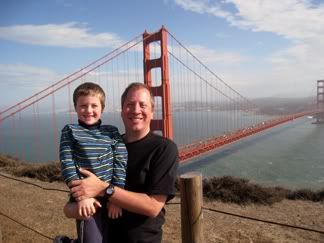
Photobucket...Yeah man, I'm back down under, after several groovy weeks in California. It was my second trip back for a visit since we emigrated in 2006, and it is always a bit strange trying to cram so much into two or three weeks. Not to mention rather exhausting being the single-dad with the 6-year-old boy while Mom stays in New Zealand. There's the meet-ups with old friends, wedged into everyone's busy schedules, where you get an hour or two to play speed catch-up of the last four (or even 20) years of your lives. There's trying to show your son all around the area you grew up in, trying to ensure quality time with the grandparents and the uncle, and trying to get some American-style shopping in there. Somewhere you also attempt to "relax" on this "vacation" some.

Highlights of this year's journey --
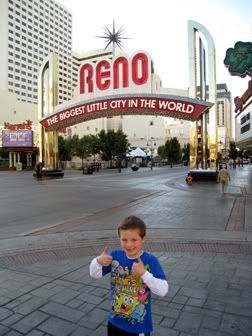
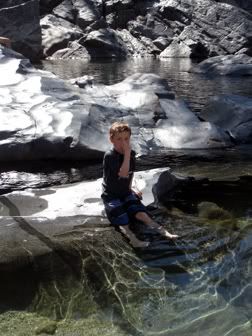
Photobucket• The places that are etched in my mind from childhood and onwards, all wonderful to see again -- the high, dry foothills of the Sierra Nevada where I grew up; the sweeping lonely casino-filled vistas of Reno and Western Nevada, both tacky and epic western at the same time. The sweeping blue expanse of Lake Tahoe, where I spent much of the late 1990s, the grand granite-lined canyons of the Yuba River, the finest place in the world to while away a hot summer's day. And of course sweet San Francisco, which still has the same kinetic effect on me it did the first time I saw it back in the 1970s -- Coit Tower, North Beach, Chinatown, the giant Sutro Tower (the "monster tower" of my childhood), the candy-box spectacle of the houses stippled up and down the hills, the sweeping Golden Gate Bridge, foreboding Alcatraz hunched in the harbour -- I do love that place.

• The climate really knocked me for a loop, though. I'd forgotten that late September is peak allergy/pollen season and that, combined with the staggering dryness of the climate after being so used to humid New Zealand, left my sinuses feeling like a barometer the entire time. It's a shame I love an area yet hate the atmosphere.

• One thing that struck me is how battered and cynical the American "mood" seemed. A liberal like me thinks it's the hangover from 8 years of colossal failure by Bush and the impossible expectations laid on his successor. Far as I can figure the Tea Party folks are against nearly everything being done these days but I have yet to really figure out what they'd do about it or why they didn't speak out during the wild government expansion of the Bush years. It's nearly Election Day in the US and while I hope people aren't dense enough to give the party that screwed everything up for 8 years ANOTHER chance at the House or Senate, my feelings are that the American people just love being fooled by big promises and vague platitudes, from either side of the aisle. The failure of the two-party system -- if we don't like the guy in the White House, we'll just vote against EVERYTHING he proposes -- is manifest. While NZ politics are far from perfect, the minor parties here have a much stronger chance of actually getting their views shown and making a difference through coalition governments. In general politics here seem a bit less shrill, less polarized. I really am starting to fear the American system is terminally broken, no matter who's President.

• The recession that hadn't quite happened last time I visited in summer 2008 was in clear evidence -- vacant shops from Sacramento to Reno, several friends who've lost jobs/money in the past two years. The newspapers I once read have all shrunk into near-nothingness -- thanks to narrower "web widths" (reducing print costs) and staff cutbacks. I remember when the San Francisco Bay Guardian, say, was a thick monster of a free weekly tabloid you could kill a cat with, whereas the one I picked up last week was a wee thin thing. I know my industry is changing and it has to change, but it is a shame to see the newspaper so withered in size and influence.
Photobucket• As always the sheer SCALE of everything in America dazzles after a few years away in a small, small country. Mega-malls the size of small New Zealand towns, spreading silently over the countryside that once contained nothing but fields; more big box stores than you ever imagined existed; giant cars everywhere. Theme restaurants that serve more food on a plate than one man can decently eat; a "large" cup of coffee that is at least twice the size of one you'd find down under. All of this exists in some form or another in NZ, of course, but just "less" of it.

* On the flip side of course is how cheap anything and everything seems in America compared to NZ -- as usual I stuffed my suitcases to the brim with things like books, CDs, toys, over-the-counter medicines and blue jeans, all far more costly down here. Found several wonderful things to jam in the bags such as the "Nuggets II" CD box set, a great "Art of Brian Bolland" coffee-table book I didn't even know existed, lots of awesome Beat literature at the wonderful City Lights Books in SF, and much, much more. It's a good thing we only get back to the US every couple of years as my wallet and bookshelves really couldn't handle more often.